Spring is here. The season of renewal, of starting life anew. How poetic for me. I feel like I just woke up from a bad dream, and suddenly five years have gone by. Trying to get my health in order has been no simple task. I had been telling myself to not worry about how long it takes, as long as I manage to come out healthy on the other side. Yet, now I look around and realize how fast time has gone by while I’ve been taking it slow. I can’t shake the feeling that I have to somehow make up for lost time. No matter what I’m doing, I constantly get the feeling I should be doing something else.
Then I realize that this is all somehow familiar. Maybe not as strongly as now, but I’ve felt this way before. It’s as though I need to learn the same lesson over and over again. As if I was forgetting something I knew before. Somewhere along the way I had forgotten difficult lessons of the past. Somewhere along the way I had lost my way again.
I find myself at a crossroads. What now?
“Where are you supposed to be?” “Are you where you’re supposed to be?” I find myself asking these questions. When I stop and think about it, the closest I’ve ever been to having a satisfying answer was in Japan. But even then, I had doubts. I would sometimes ask myself, “is this really where I’m supposed to be? Am I really doing what I should be doing?” The world is such a big place – I could be doing so many different things. Maybe it’s only natural as humans to constantly search for greener pastures. And the grass is always greener on the other side. It’s so easy to take what we have for granted. The search for a better and better paradise is always ongoing. Perhaps the only solution is to become paradise. They say the home is where the heart is, and if that is true, then my true home is right here, with me always, beating inside my chest. My problem isn’t the place I’m in. It is me.
At least now I know this from before: It is always worth it to start over. Always. Even when in the depths of despair, choose rebirth.
It’s time to build myself back up from nothing again. How many times have I done this before? It should be nothing new, but it never gets easier. It’s time to choose a direction. It’s time to choose who to be.
Spring has come once again,
I think about you now and then.

Cloudy skies, bleeding heart,
Wish we never had to part.
Muddy paths, icy streets,
Where is really home for me?
I walk this path on my own,
Feeling somewhere far from home,

Did I leave my heart somewhere?
This burden is so much to bear,
Holding onto something of some kind,
In my head, on my mind,
Maybe I can leave it all behind,
And return to you someday.
Become strong and walk away,
From all I know, once again.
I think about you now and then.

Gloomy days, and cloudy skies,
Anxious thoughts and teary eyes,
Dirty roads and melting snow,
On this path, I walk alone.

Starting over one more time,
Leaving everything behind.
I do it all with you in mind.
Home is where the heart is,
but where is mine?

In front of me, two paths to choose,
Time is short, but I’ll wait for you.
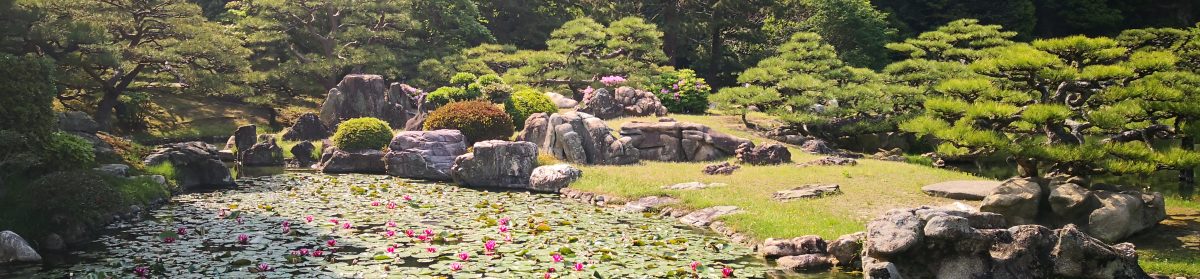
The lake reflects the trees above,
Will you ever know my love?
Renewal blooms from those trees,
Could that be the same for me?

Rainy weather, lonely hikes,
Longer days and shorter nights,
I dream of seeing you again,
I think about you now and then.

Where am I supposed to be?
I think it’s time for me to leave.
I close my eyes, and make believe,
The truth is that you’re all I see.

Has it all been too long?
All this time, have I been wrong?
Places to be, places to go,
Calm yourself down, try taking it slow,
Just one step at a time,
But no matter what, time still flies.

Will this weight ever get lighter?
I miss those days that were brighter,
I wasn’t ready to say goodbye,
But now begin a new chapter in life.

Spring has come once again,
But ultimately, in the end,
I still think about you now and then.
If
you wanted to feel like you had made your own choice, then you
joined. I knew someday in the near future, I would get a letter
telling me to show up at a certain place at a certain time and I’d
be stuck in the army anyway. Once you turned 18, if you didn’t
volunteer, they sent you that letter; and I had just turned 18 in
June of ‘43. It was more or less conscription through the National
Resources Mobilization Act. Canada didn’t introduce official
conscription until later, when it faced a shortage of troops from a
lack of volunteers after its campaigns in Italy and the Normandy
invasion – even though the Liberal government of 1939 promised it
would not do so.
So
Jack McEwan and I became volunteers in January of 1944. Jack was a
friend from high school, and we enlisted together. I was hoping to
get into the airforce, but because of my eyesight, and because the
Army needed to fill in for the casualties on the front lines, I was
put there instead. There were those of us, like Jack and I, who
volunteered and were willing to fight, and then there were those they
called the conscientious objectors. They ended up in the army as
well, but we were basically two armies: one of conscripts, and one of
volunteers. The conscripts were put into places like guard duty or
the medical corps. They ended up carrying wounded soldiers on the
battlefield instead of carrying rifles. We did basic training
together, but in two different companies. They didn’t mix the guys
who had volunteered and the guys who hadn’t. We were on the same
parade grounds, though.
We
were living in Quonset huts laid out at the ends of a spider-like
pattern, where in the centre you had accommodations such as the
washroom, where you shaved, showered, etc. The huts were filled
mostly with bunk beds and each was connected to these central
facilities. One night, when everything was quiet after lights out, a
bunch of us got together and grabbed the fire hose, put it through
the window of the conscripts’ hut and turned the taps on. Then we
scrambled like crazy to get back to our hut, and into our beds with
the sheets up, pretending to be asleep, but waking up with everyone
else wondering “what’s the matter?!” Meanwhile, the other guys
had gotten pretty damp.
Jack
and I stayed together up until the summer, when he was sent to
Kingston for the rest of his training, and I was shipped to England
for mine. Eventually, he wound up in Italy, and I in Belgium and
Holland. Our forces were coming up, initially from northern Africa,
through Italy and into central Europe. He would have gotten involved
with that. June of 1944 is when they decided to hit the coast of
Europe: Normandy. At that time, I was still training in Canada near
Barrie, Ontario.
By
July, I was training in England. From Camp Borden, just west of
Barrie, I was sent via train to Halifax; and from there, I ended up
on a troop carrier ship. That particular ship was renamed from the
Empress of Japan to the Empress of Scotland as soon as they got it
into the water. It was bigger and faster than convoys, and it came
equipped with sonar. Hopefully we wouldn’t run into trouble. We
embarked on our overseas voyage, but I didn’t know where we were
going. The army didn’t confide in lowly rank and file, and I was only
a Private. We arrived in Glasgow, Scotland, at a harbour that wasn’t
deep enough to handle the ship. Small boats had to pull up beside us
and transport us to shore. Upon finally landing, we were taken to an
army camp in Yorkshire, where we spent more time training. No fire
hose shenanigans this time. Next,
I was sent just south of London, to Cove, where
I spent time learning the art of being a radio operator. In
those days, the radio was very big (it weighed about 35 lbs.) and it
also had a big antenna on it, which made you a marked person with it
waving around. You had to carry it on your back like a backpack, but
of course you couldn’t operate it there, so you had to sling it off
your back and work at it in front of you. Never did have one to
operate after we got out of the camp.
It
was mid-September when training was finished and we were to be
shipped out to France. We were at a harbour, somewhere close to
Brighton, and they had these giant blimp-like balloons tied to the
ships via long cables. These barrage balloons were set up to deter
strafing runs of enemy aircraft, as the cables presented a hazard to
any pilots who
veered too close.
As such, it would force them to stay
at higher
altitudes, and thus
decrease the
surprise
and bombing accuracy. This also meant that friendly fighters and
anti-air artillery could acquire enemy targets easier, should they
attempt an attack. But the result was a harbour filled with different
sized
ships
and goofy-looking balloons hanging over top of them. It looked like a
mess. Among the ships, there were three landing craft that they were
loading troops onto. The other grunts and I were jammed in with all
our gear – a waterproof pack filled with clothing, toiletries,
rations, and whatever personal effects we decided to haul around; a
cartridge belt; a first aid pouch; canteens; a rifle; a small shovel;
and a cargo pack with a tent and blanket inside. My
rifle, like most others, was a bolt-action Lee-Enfield .303 that held
a cartridge of 5
rounds. A
few
of the other men ended up with a
STEN gun, which was a submachine gun that could chop off
your
fingertips if you weren’t careful about how you held it when
firing.
The
troop
carrier
I was on, in particular, was the last one out. The first two made it
out fine, but this
one
must have hit the bottom with the propeller and bent the shaft,
because it
couldn’t keep up with the others. We had to turn around and come
back into the harbour. On our way back in, we were travelling slowly
when they threw out a rope to the dock, and pulled it tight over an
anchor – but
the
rope had a lot of slack down in the bottom of the ship amongst the
troops, and
the
boat refused to stop. Soon enough, the rope tightened up in the air
above the men, and it wasn’t enough to stop the massive ship. It
snapped, whipped down with a lot of force and knocked a bunch of
troops down on the deck. I wasn’t close enough to see exactly what
it had done to them, but it could have easily broken a neck. Luckily
the easiest place to carry a helmet is on your head, so most everyone
was wearing one. Once they finally got the boat properly tied up,
they offloaded everyone on board, put us in vehicles, took us down
the coast to another port, and loaded us onto a ferry – with two or
three decks full of troops. And
instead
of going to France they took us to Belgium.
We
first landed in Ostend, but were shipped across to Ghent. It was a
small city. You learned a lot of things that you didn’t know about
when you got into places like that. Washrooms weren’t the type of
porcelain stuff you were used to. There could just be a cement floor
with a trough down the wall and water running through it, with
footprints on the floor – so you’d put your feet there, and then
did what you had to do down into that trough. My first job was guard
duty at the Leopold Barracks
– a palace-looking
structure.
There were two classes of Belgians: Collaborators, who went along
with the Germans for whatever reason – to get more food, get away
from hassles, or things like that – and non-collaborators. At this
stage of events, the locals were picking up the collaborators, but we
weren’t a part of that. They brought these people in and, with a
razor, cut a swastika on their heads, marking them as German
sympathizers. But that was only one of the lesser things that
happened to them. We were put on guard duty to try and control what
was going on with the prisoners that the locals were bringing into
the jails, and they weren’t treated very nicely. There was a lot of
animosity over the three or four years under the foot of the Germans.
And of course the Germans were hoping to get some cooperation out of
people – and if they didn’t get it, they made it. It wasn’t
unusual to hear machine gun fire going off at night, or
see bodies floating in the canals. They were civilians, but they had
obtained weapons since the troops came
in. Some of them would take weapons off of Germans that were no
longer able to use them. We were there maybe a week at most, and then
we got moved on into Holland. In the military the only information
you really get is from receiving commands. You’re not told very
much – just “go.”
In
mid-September, our troops were trying to cross two bridges over the
Waal River at Nijmegen. Our forces orchestrated a landing of
paratroopers and gliders. They called it Operation Market Garden, and
the plan as a whole intended to secure a series of nine bridges that
could provide an invasion route to Germany. The idea for this
operation was to land these troops and have them hold the bridgeheads
until reinforcements arrived, so that they couldn’t be destroyed.
What our commanders didn’t know at the time was that the Germans
had moved a Panzer division into the area. When the gliders and
paratroopers came in, they were in for a surprise. They fought over
the bridges – back and forth – and they expected to get
reinforcements, but the reinforcements had been delayed at Arnhem.
They needed food and ammunition – and you can’t
do much fighting without ammunition. After five days of fighting, the
offensive couldn’t continue. In the end, a lot of those
paratroopers ended up as prisoners of war.
I
landed in Europe early October, so by the time we got to that area,
we had captured the bridges and the battle had moved on. I actually
walked across a bridge at Nijmegen with the rest of the troops to
fill in behind our forces. It wasn’t all “go-go-go,” either,
because you would only travel so far before you had to stop and
regroup. Where we stopped was just behind where the paratroops had
landed. We stayed stationary there for a number of days. The officers
would send out a group of maybe five or six troops, usually at night,
to reconnoitre and get an idea of what was up ahead. So I went out on
one of these patrols with a handful of other men, and we actually
walked through the area where the gliders had landed – and they
were still there. It
was eerie to see their instruments glow in the dark from the
radium-based paint. A lot of them had a bunch of equipment in them
that never made it out, but you didn’t dare touch any of it. The
battles had gone back and forth, and both sides had occupied the area
at one time or another, so you didn’t know if anything was
booby-trapped. If you really wanted to, you could touch them, but
then you might not live to tell about it. I decided I didn’t want
to.
On
our foray, we came across a farm house. Our commanding officers
wanted to find out if they could get a hold of some German troops for
information regarding what was going on in the area. We weren’t
sure if there was anyone in the house, but it could have been
dangerous to step inside. We threw an incendiary grenade at the door
and it started going up in flames. No one did end up running out, but
it was one less place to worry about anyone hiding in. When we
continued our patrol, we discovered one of the guys didn’t put the
safety on his rifle, which caused a bit of a funk when it went off.
He shot himself in the foot. Since he wasn’t able to walk very well
after that, we had someone carrying his rifle – with the safety now
on – and the other two helping him along to get him back to our
platoon.
When
we got to some of these places, it was uncanny. Everything was
vacant. You kind of wonder where everybody went. They had moved on
and away, out of the noise of the shells. One night, our platoon
slept in a barn that had a bombshell embedded in one of the walls. We
had orders not to touch it. The people may have been gone, but the
animals were still there. Some of them had been hit with pieces of
shrapnel. Though they were still mobile, they were in trouble. A
shell doesn’t discriminate when it lands. It damages everything it
can. Other platoons were scattered around the farm area. We grew
tired of rations, so some of the guys got the bright idea to shoot a
cow. They slung it up in a tree, butchered it and sent it off to the
cooks. It was there that I found canned horse meat. First time I’d
ever come across that.
We
moved on from our static position. When we moved up, we generally
took over from somebody else. Every so often in the warzones, troops
would be circulated. Those on the front would pull back to a rest
area and fresh troops would take their place. There were what they
called foxholes, that were really just holes in the ground, deep
enough that you could get down and out of harm’s way in them. So we
moved in at night to relieve those already at the front in their
foxholes. But moving 200 or 300 men into position is difficult to do
quietly when they’re carrying rifles and all their gear that would
clank around. The enemies would hear this and become curious as to
what’s going on, so they would send out patrols.
Every
once in a while they decided it was too quiet and started dropping
mortar shells. Mortars were basically metal tubes that were aimed on
an angle. They’d drop a bomb down the tube and it would fire it up
into the air. After a couple of those going off, we’d be down in the
foxhole in a hurry because it started splattering shrapnel all over
the place. So we had a couple sessions of that, then moved around,
and I eventually ended up in my foxhole during the night time. When
we took over from the guys that were in it, they pointed at what
looked like a hedge row and said the opposition was through there.
The landscape was pretty well flat – a
farm field on the edge of a forest. We set up our Bren gun, which was
like an oversized rifle with a pair of feet on the bottom with a
curved cartridge of 25 or 50 shells in the top of it. It was a pretty
good and accurate weapon, and we had it pointed towards the hedge. I
also put maybe three or four hand grenades at the top of the trench
on one side; I’m not sure why I put them there, but I figured that
I didn’t want to carry the stupid things and if I needed one I’d
pick it up and pull out the pin. What we weren’t told was that we
were in the last foxhole on that side, in the row of foxholes. We
were at the end of the line, and we didn’t even know it. That’s
how things got dicey.
Some
time after we had everything set up, in the pitch dark of night I
heard something nearby. I wasn’t too sure what, but I picked up a
grenade and pulled the pin. It was about then that three or four guys
with submachine guns stood up on our flank and started saying “hande
hoch!” So we put our hands up – but I’ve got a grenade in one
hand and the pin in the other. And it was dark, so they had no idea
what I was holding. The timer on these grenades was about ten
seconds. The outside had a spring loaded lever, and when you pulled
the pin it allowed you to release the lever and start the timer. As
long as I had it in my hand with the lever down it wouldn’t go
bang, but I didn’t want to let it go now. I could’ve said,
“here,” and handed it to them and hoped I could somehow get away
from the blast; but I managed to get the pin back in, because I knew
realistically if I dropped it we would all be goners.
The
thing is, we were on the border of Germany, and they had been there
maybe four or five years. They had dug trenches about four feet deep
across the field and taken all the dirt away, so they could march
across the field and you wouldn’t see them – even in the
daylight.
That
was November 21st, 1944, and it was when the two of us in that
foxhole became prisoners of war. And I was in the prisoner of war
camp until the 8th of April, 1945.
The
Germans initially took us back to their front line, where their
officers were. They had been there for so long that they had dug out
rooms and covered them with logs, and put dirt and grass on top to
make them well hidden. I ended up being interrogated by one of the
officers, wanting to know who they were up against and what we were
doing. Of course you were only supposed to tell them your name,
serial number and rank. So that’s all I told him. But, they could
see from my uniform that I was Canadian. I ended up in the same cell
as a Royal Air Force pilot, who had been flying a Mosquito before he
was shot down and captured. The Mosquito was a two-engine freighter
bomber, and at that particular time it was one of the fastest
aircraft that either side had. Since we were in the same cell for the
time being – as he was an officer, and they separated the officers
– and he was English, we talked. He said he used to have a
two-seater, him and an observer/navigator that he would get to turn
his seat around and look out the back of the aircraft to let him know
what was coming behind them and how far. I don’t remember exactly
how he was shot down; it may have been from flak. There was an
anti-aircraft gun that fired 20mm shells in a series. It always
amazed me at night to see that type of ground fire going towards
aircraft, because
every so many shells was a tracer
round
that glowed; so you would see every fifth round
shoot into the dark sky – and each seemed like it was catching up
to the last.
I
was in the cell with this pilot for a couple of days before they
moved us. It took a few days to get to the prisoner of war camp. With
a group of German soldiers guarding us, we went through some of the
towns that were bombed, and they were a complete mess. At least half
of the buildings were just piles of brick. At parts like that, we had
to get out and walk. You could tell the people were rather hostile
from the way they acted. They recognized that I wasn’t a German
soldier, and they weren’t very pleased about what had happened to
them. But I didn’t really get to interact with them, because I
always had an armed guard with me.
Prisoner-Of-War
(POW) Camp XIB in Follingbostel was initially a training camp for the
Germans at the outset of the war. It was on top of a salt mine, and
they turned it into a number of POW camps for various different
prisoners. There was a group of Polish women in a camp adjacent to us
that
were forced to work on munitions. And
there
was another camp closeby where the people were treated very badly –
the Germans brought them out every so often, maybe once a week, from
their cells down in the salt mine, and they would line them up, yell
at them, pick up a board and hit one of them with it, knock them
over, and generally abuse them like that. It seemed to me that these
people were some sort of political prisoners, though there wasn’t
much political about it. The Germans captured anyone that was Jewish,
or that seemed Jewish. Even if their name sounded like it might be
Jewish – they didn’t have to be a pure Jew. Our camp was all
soldiers – privates, maybe a few corporals and perhaps a few
sergeants, but the officers were kept in a different camp. The pilot
that I previously shared a cell with would have been sent elsewhere.
A lot of the paratroopers from Operation Market Garden were British,
and the highest ranking officer in our campground was the sergeant
major from that group. He organized (more or less dictated) what we
did; he wanted people to be clean, and once per day you ended up in
line like on a parade to make sure they had 500 bodies. He basically
ran it like an army, and kept everyone together and in order.
The
campground was pretty well full. We
were enclosed by barbed wire, and shoved in crowded
huts filled
with
triple-decker bunk beds. Sometimes there were two to a bed. They had
a sack full of straw for a mattress, with the fleas that went with
them. I hated the fleas. We had no change of clothes, either. Each of
us was stuck wearing the same uniform we were captured in for the
entirety of our time there. The food was very well non-existent. You
might get a piece of black bread, a piece of cheese and some of what
they called coffee – but it was imitation. They didn’t have
anything like coffee beans. I discovered that trying to do anything
with the bread was a pointless endeavour. You couldn’t toast it –
obviously we didn’t have anything like a toaster, but if you had
any kind of flame, it would just catch fire and burn blue. And you
didn’t experiment too often, because you only got the one piece to
try on. You also got a bowl of soup – supposedly soup – made out
of turnips. They tried sugar beets a couple of times, but you
couldn’t even take that because it was too sweet. Didn’t matter
how hungry you were. Sugar beet is not something you want to make
soup out of. In fact, you don’t really want to make soup out of
turnips either. And that was all that was there. Nothing in the way
of meat or anything. Maybe two meals a day, breakfast and supper. I
ended up losing a good 30 pounds in there over the course of 6
months. Went in at around 155 lbs and came out at 125.
Sometimes
we were able to volunteer for work crews. They would gather a group
of about 10 or 20 prisoners to go out with a few armed guards on
various work details. It got you outside the barbed wire of the
campgrounds, so I was always a volunteer. Most of what we did was
repairing railroad track. It took multiple people just to move a
single piece of it. The steel track could be about 30, 40, 50 feet
long and it weighed a lot. You know that old saying that you can drag
a horse to water, but you can’t make him drink? It was the same thing
when we were supposed to be working. They gave you a shovel or a pick
and you would put it in the ground, but maybe take ten minutes to
lift a shovelful. Then, they would get mad at you and yell, so you’d
say, “okay, okay,” and finally pick it up and dump it
somewhere else. I also ended up in the salt mine on two different
occasions. They were excavating down there and putting in rooms with
the intent of having factories underground. After being down there
twice I made a point of being somewhere else when they were looking
for volunteers for that. They put you in a cage, and down you went,
watching the daylight above get smaller and smaller. You might be a
hundred feet down, you might be a thousand feet down. At a certain
point, you couldn’t tell. I’d volunteer for something, but I sure
wasn’t going down there again.
At
one point, the Germans decided they were going to move the camp
because the war was getting closer. They bundled all of us into
boxcars on a train, but we couldn’t go anywhere because there were no
tracks. We spent two days trapped in there with nothing to eat. It
was terrible.
In
an area like that, there were bombings and so on, but they weren’t
generally too close. There was one particular day, though, I was
standing just outside the doorway and there was a British B-17 bomber
flying overhead, and it was being harassed by German fighters. It was
circling as one of the engines started going up in smoke. I counted
seven parachutes that came out of it before the
whole thing exploded.
That’s when I
heard a fshoo
shoo shoo,
and
about
four or five feet away from me, a spent 50 caliber machine gun bullet
came whistling down and buried itself in the ground; and I quickly
decided
to step
back inside because
it wasn’t safe out there.
It
was around Christmas time that the Battle of the Bulge occurred. I
remember the snow; the weather was terrible. On December 16, 1944 the
German army surprised the allies by attacking in the Ardennes
mountains of Belgium, France, and Luxembourg in an attempt to drive a
wedge between the British and the US forces. They tried to make one
last push for victory on their western front, so that they could
focus on the east. Heavy snowstorms hit the battleground as the
fighting ensued. The Americans were ill-equipped for the weather, and
many died from the cold. The Germans pushed back the American lines,
creating a bulge 50 miles wide and 70 miles deep, and giving the
battle its name. But as the weather improved, the allies slowly
regained their ground. Air Force planes became able to attack and
drop supplies. The Germans ran out of fuel, ammunition and manpower.
By the end of January, 1945, the allies achieved victory. But back at
the prisoner camp, more fighting meant more prisoners. Our camp
became even more crowded.
It
was later in my time at the prison camp that I sometimes saw trains
go by – flatbeds, maybe artillery trucks – but the guys on it
were kids. I was maybe 19 at the time, but these were 13 or 14 year
olds that were gathering anything that was alive to try to feed the
army. And the guards at the camp were older men, not physically fit
to get out and slog through the front lines. I didn’t do a lot of
talking to them but I managed to get some information back and forth.
They were ordinary citizens, maybe farmers, probably in their 50s or
later, conscripted into guard duty.
As
the war drew ever-closer, there was talk about them moving the camp
again; and I thought, ‘I
don’t really want to be moving anywhere. In
fact,
if
I’m going anywhere, I’m going back home.’ So
one day, in April – they used to let us into the field adjacent to
our compound from
time to time –
there was a large group of us out in the field with a soccer ball.
There was some brush with a few decent-sized trees not too far away,
so I kicked the soccer ball into the trees, went in after it, kicked
it back, and then kept on going.
I
figured that our troops were north and west, so I headed out that
way. Soon enough, I ran into two other guys that had the same idea.
That was a surprise. I don’t know how or when they got out, but we
were from the same camp. The three of us kept ourselves clear of
travelled roadways and stayed out of sight. We drank water where ever
we could and ate anything we could find, usually from vacated local
farms.
We
found ourselves in a wooded area where everything beneath the trees
was picked clean. I suppose that over the years of the war, people
were scavenging everything they could to keep warm. There was a knoll
at one end of the trees, where we spotted a German soldier. He looked
at us, we looked at him. Everyone paused. Then he went one way, and
we ducked around the other. I presume he had a gun, but he didn’t
know that we didn’t. We were still dressed in the same military
uniform we had been captured in, after all.
Further
on, we decided to watch the road for a bit. A lot of people were
walking down it. Entire families that had packed up everything they
could, some even rolling wheelbarrows, were all fleeing from the
fighting.
We spent that night in a culvert, under a parked tank. We could hear voices from above, but we weren’t close enough to tell whether it was English or German or what. And we weren’t taking any chances. After the tank moved on, we moved on. On the fourth day, we watched the road for a while. Eventually, what looked like an American-style jeep was headed our way. We moved down to the roadside and flagged down a concerned-looking driver that wasn’t too certain who exactly he was stopping for. He turned out to be a good guy, and took us back to the British 11th armoured division.
They
had stopped and set up camp nearby. We first got cleaned up and got
something to eat. It was the first decent meal I’d had in 6 months.
A day or two later, they sent us back to Belgium where we ended up
getting on an airplane back to England. I made it out a month before
the war ended in May. They hadn’t decided what they were going to do
with prisoners of war at that point in time, so we just landed, got
looked over, and got looked after with clean clothes and the like.
Shortly after, we were given leave.
We
didn’t have a choice about going home yet. You don’t make choices in
the army. You got told when you were going. But since we were on
leave, another chap and myself decided to go to Glasgow, Scotland.
There were places that catered to soldiers; recreation areas, or
clubs, that were run by organizations like The Salvation Army or the
Red Cross. We needed a place to stay, and they provided. Of course
you took your rations with you, because they were still rationed at
that time. We spent a few days there, and met another soldier who was
getting married. He was from Nova Scotia, and since he had no family
that could make it, he wanted Canadians at the wedding. Three of us
wound up at the wedding, and we got put up for the night. But there
was only one bed – so we laid across it instead of sleeping on it
normally. Still better than the camp.
We were on the train from Glasgow to London when word came out that the war was over. The Germans had quit. Stepping off the train was a sight to behold. London was a madhouse; everyone was out in the streets. But when we got back to camp, they had still not decided how to treat those that were prisoners of war. After beginning to eat something that you hadn’t for 6 months (full meals) you got instant indigestion for a month. In fact, you weren’t used to eating, period. Later on, I imagine they looked after diets and things like that for people coming out of the prisoner of war camps. They did create specially organized units with the purpose of recovering and repatriating surviving prisoners when the war finally came to an end, but since I was out before all of that, I had no experience with them.
I
was eventually shipped home on the
SS
Volendam, escorted by a Fairmile. I was back in Toronto by June,
1945, and very happily so. I was able to return to life as a regular
citizen. It
wasn’t for another short while until I saw Jack again. He was still
on duty after the war ended – but
we
both made it through. Some
time later,
I received my medals:
War Medal 1939-1945: awarded to full-time personnel of the Armed Forces for serving for 28 days between 03 September 1939 and 02 September 1945.
Canadian Volunteer Service Medal: granted to persons of any rank in the Naval, Military or Air Forces of Canada who voluntarily served on Active Service and honourably completed eighteen months total voluntary service from 03 September 1939 to 01 March 1947. A silver bar (or clasp) was awarded for 60 days service outside Canada.
1939-1945 Star: awarded for six months service on active operations for Army and Navy.
France and Germany Star: awarded for one day or more service in France, Belgium, Holland, or Germany between 06 June 1944 (D-Day) and 08 May 1945.
War
isn’t something you should ever get involved in. When the army
commands you to do something, it doesn’t matter if you like it or
not. You can’t just say no; and it’s a dangerous job. I spent a
long time trying to forget it.