I am an English teacher, living abroad, with a keen interest in society, culture, religion and philosophy. My education involved large amounts of research, reading, and writing in these topics. With the skills I have honed, I plan on sharing my knowledge and perspective through this blog.
Long time no see. Happy new year! How many people do you think make new year’s resolutions? Guaranteed, far less actually follow through with them. I’ve never seriously had any. But being in Japan has made me think that I ought to correct course, at least for this year, seeing as how things have been so different out here, and I couldn’t have possibly expected everything that’s happened thus far. So I took a moment to think about what’s missing. Lately, I’ve felt like something is off. There’s been a sort of frustration, and depression looming within me, probably amplified by the language barrier. What I’ve been lacking is a means of expressing myself. So this year my resolution is to find more outlets for creativity. I guess we can start right here. Writing is a therapeutic process, and it’s perhaps the only way I get to express myself anymore. But I haven’t written anything since my cat passed away. And the other problem is that the type of blog I wanted to create was one that’s polished, and not all that personal, so I feel like I can’t just sit down and write nonstop about what’s going on with me, and then actually post it without major overhauls. Maybe this one will be a little bit different. Sometimes detours are fun.
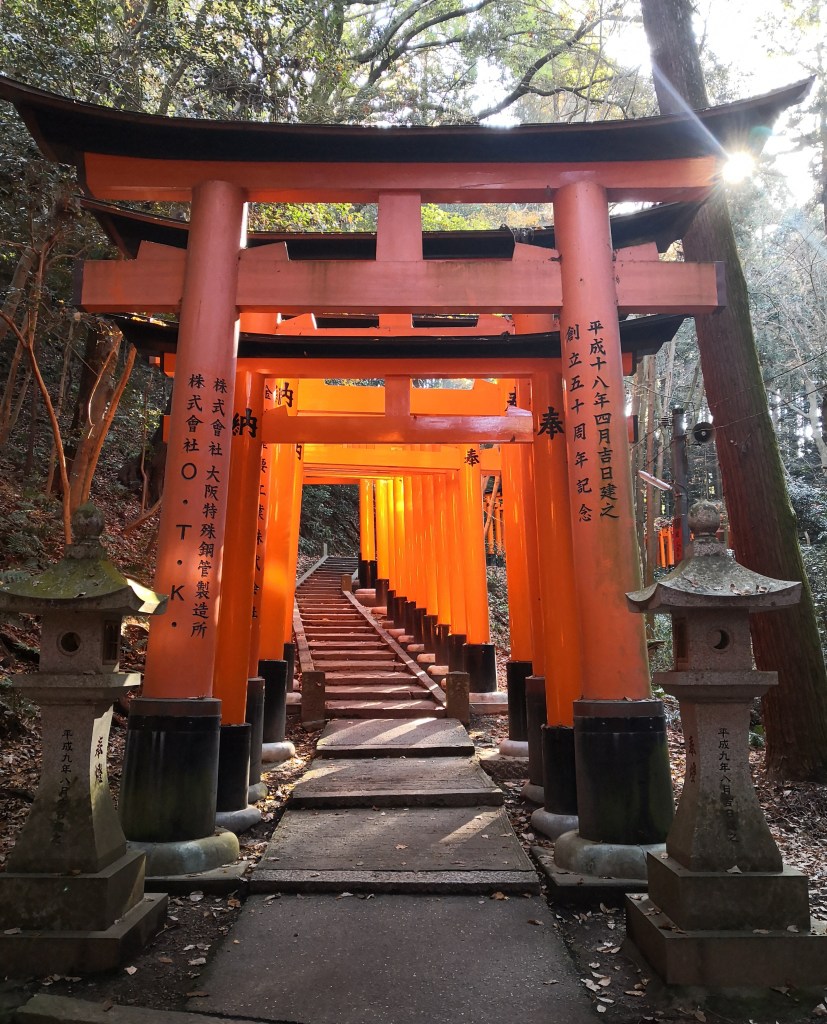
Fushimi Inari, Kyoto
On Christmas eve, I sat on a bus headed for Kyoto, racing through tunnels and over highways. I peered through the window at the passing mountains splashed with lovely autumn colours: Deep greens, vibrant oranges, spots of yellow, reds here and there. It was hard to believe it was nearly Christmas. Not a speck of snow. In fact, it was quite warm. During the day (and even now), it sometimes gets up to around 15°C. This is not at all the winter I’m accustomed to. I was told that Kyoto would be colder, but I still couldn’t tell the difference. In Canada, the past few New Year’s in recent memory have been extremely cold. The one night with the most pressure to go out, party and have fun, and I’d rather just stay inside where it’s warm. Here in Japan, it’s customary to go to a shrine rather than go out drinking (though nowadays, many people do both). In fact, since the Japanese work so much, many of them take this time to continue working instead of doing anything celebratory. Needless to say my New Year this year was much different from any I could have possibly had back home. From Christmas to New Year, I visited more shrines and temples than I could even keep track of. And for New Year itself, I tried the traditional Japanese food for the occasion, Nabe.
Whenever I visit the big cities in Japan, one thing that always unexpectedly stands out to me is when I hear something other than Japanese. Especially when it’s spoken to me. When I went to Tokyo, staff tried to speak to me in English, which really threw me off because I had prepared Japanese in my head. Surprised and unsure how to respond, I stood there staring at them, like a deer in the headlights. I suppose after hearing only Japanese for so long, I’ve just grown used to it. Lately, I’ve started thinking of what I have and haven’t gotten used to here in Japan, and so I made a short list:
Things I’m used to:
Hearing Japanese. Not only from people, but all of the audio that’s played everywhere here. Wherever you go, there are automated voices speaking to you in Japanese, from the subway to the ATM to the supermarket. When you walk around virtually any store here, there are advertisement videos playing loudly on a loop all over the place (which are very, very annoying). At first I was awestruck at how different it was that there were so many sounds playing everywhere. Now, I wear headphones when I shop.
Paying my bills at the convenience store. This is actually very – dare I say – convenient.
Crowded and chaotic subway stations. I realized in Kyoto that this doesn’t faze me anymore. When I first arrived in Osaka, I was floored by how many people there were going every conceivable direction. It was madness. At the time, trying to figure out how to navigate myself through all of that was a daunting task. Now, it all feels pretty normal to make my way through the crowds. (Though, the massive crowds during peak hours in the food court at the mall still scare me.)
Super toilets. Nothing bad can be said about these. Every country should have them. Bidet? You got it, fam. But that’s not all. What angle do you want it at? What water pressure? Hot or cold? Do you want the seat warmer on? Turn that sucker up. How about the music? Louder?
Things I’m still not used to:
Speaking Japanese. I’m still very much a beginner at Japanese. I can get by just fine as a tourist, but having any sort of meaningful conversation is still beyond me.
The temperature outside. In the day it gets real warm (~15°C), and then at night it gets pretty chilly (~4°C). This is not even close to the usual winter weather I’m used to. It feels like I’m trapped in perpetual autumn. I didn’t even have a coat until about December, and when I take it with me during the day I feel like I don’t need it, until I’m leaving work at night and thankful that I brought it. I’m not complaining, though. It’s much better than the cold back home.
The temperature of water in my kitchen. My kitchen sink has two possible temperatures: cold and liquid magma. Attempting to get anything in between is a fruitless endeavour.
Squatters. The opposite of the super toilet. Man’s worst enemy. It still amazes me how, wherever you go in Japan, you either find a super toilet or a hole in the ground. Nothing in between.
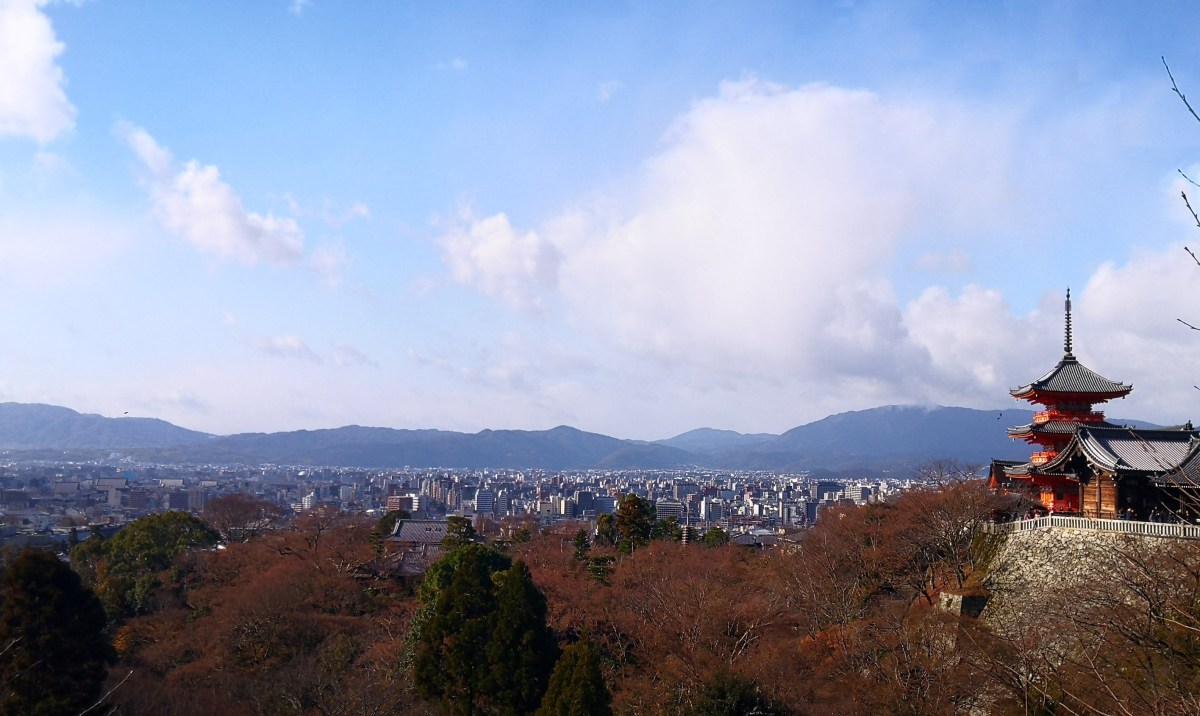
And one final honourable mention: I’ve seen a lot of weird shit in Japan, but nothing was weirder than when I was at Kiyomizu Temple in Kyoto, and there was this tourist, nicely dressed, as though he was on a date, but with a stroller. Okay, fair enough; maybe he was there with his wife and kid. Nope. To my surprise, inside the stroller was a little brown dog, that looked like it gets better treatment than the queen. It had just been groomed; it’s fur was perfect, it had a nice little bow, and an expensive looking collar – like it was on a date. And as I watched him struggle to get the stroller around the temple, I just couldn’t get this image out of my head that this man was on a date with his dog at Kiyomizu.
And thus I’ve concluded this last decade by doing something completely different far from home. It’s been a long strange trip, but I’m so glad I made that first step. One day I decided to go to Japan, and then before I knew it, I was here. It doesn’t even feel like it’s been that long; but then, someone will ask me, “how long have you been in Japan?” and then I start counting the months, and I can hardly believe it. My initial plan was to come out here and travel all over Asia. Suddenly, I’ve made a life for myself here in Japan. It’s a shock for me to think about, but isn’t that what I wanted? I think it’s going to be harder to leave than I first expected.
When you go abroad, you’re going to miss out on things back at home. It’s inevitable. My sister calls and I see how much her kids are growing. And I’ve only been gone a few months. The smallest one has even started walking since then. They really do grow up so fast, don’t they?
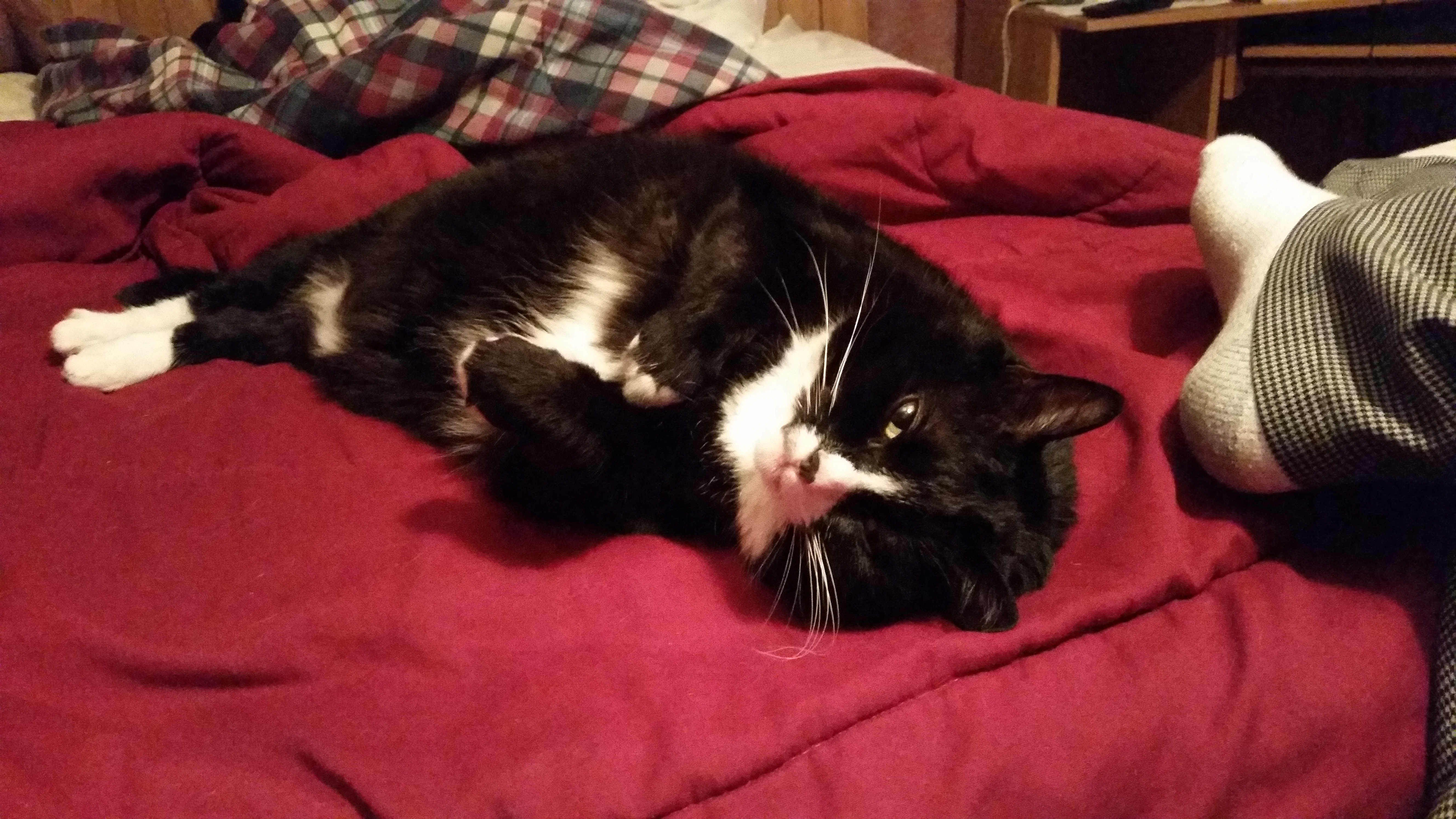
I was asked if I was homesick recently, and all I could really think was that I missed my cat. I got her when I was 12 years old. With her being a black and white cat, and me being 12, I named her Oreo. In those days, she was tiny and slept on my chest. I pet her while she ate, and she eventually grew into a monster. Not in personality, but in size; she always had a gentle, lazy personality. She liked to just hang out in the same room and enjoy your company, and she loved to be pet. She followed me around the house and would march over to me and plop down on the floor, sprawling out, which was her was of saying, “touch me.” Coming home from school, university or work, meant she would always greet you at the door, and start purring as loud as any cat could possibly purr when you rubbed her head. Sometimes I wondered what she did all day. She lived in her world, and I in mine, but the moments those worlds intersected were moments I truly cherished.
She stopped eating recently. It was discovered since I’ve been away that she was in the final stage of kidney disease. I knew my mom would take good care of her in her final days, but what’s most heartbreaking is that I don’t get to spend any more time with her. I’m no stranger to losing those that I care about, but damn does it hurt every single time. Since I left, she laid in my room, day after day, awaiting my return. After all, we grew up together. I raised her from a tiny kitten into a gentle giant. For 16 years, she was a best friend to me. She was a family member. And after 16 years of friendship, over video call, I had to say goodbye to her. It’s absolutely heart-wrenching that I couldn’t be there in person for her. After her struggle for the past month, she passed away this morning. In this world goodbyes may be inevitable, but I’ll always remember the time we shared. I love you, kitty.
It’s a little overwhelming, suddenly not understanding anything. At first it’s okay; you’re in a new and exciting place, and it’s to be expected. But then time goes by, things aren’t all that new anymore, and finally, it sets in: you really don’t know anything.
Before I left Canada, I tried to learn some Japanese. I thought I knew enough to get by; if I was only traveling through here, that may have been the case. Being here to stay has hit me with the stark realization that I know nothing; and the language barrier can be very frustrating. Direct translations are terrible and nonsensical. Why does this chicken say south pole?! Only one of many unsolved mysteries. I pick up unknown things in the supermarket and try to Google Translate, but it just leaves me demanding, “what are you?!”
This has made it extremely difficult for me to balance my diet. In Canada I would look at different foods and think, “am I able to eat this?” before I came to a decision. Now, in addition to that, I first have to ask, “what in the world is this?” which usually leaves me guessing for long periods of time, and often to no avail.
So to compound my frustrations with the language barrier, I have also often felt sick for eating questionable things. There’s nothing more disappointing and frustrating than cooking a meal that seems healthy, only to have your body destroy itself over it. At times it’s left me wondering: am I doing the right thing? Am I in the right place? Am I where I’m supposed to be?
There have been countless times when I didn’t know where I went wrong. But not understanding is the first step to understanding. Maybe you don’t want to admit it, but things could always be better – and they could always be worse. Which are you going to focus on? To aim for? The path starts here. Focus on where you want your path to go, and walk it. And don’t be distracted by other paths; that’s how you lose your way.
I question myself. I have my doubts. But then I leave work, and suddenly it hits me. Holy shit. I’m in Japan. I made it. Goal accomplished. Dream fulfilled. Time to live it. What’s funny is that of all the different things here, the strangest feeling I get is when I’m leaving work. I step out of English immersion, and cross the threshold into a world overflowing with an entirely foreign language. It’s like being hit by a brick wall of Japanese. And so, every once in a while, I get this feeling: “whoa, I’m really here.” And it all seeps in that I’ve been taking steps in the right direction. I’m out here carving this path for myself, and I’m right where I’m supposed to be. I’ve been accomplishing my goals all along. How strange that I never noticed before.
At the beginning of my blog I asked a few questions: “What am I doing here? Should I be here? Is this what’s right for me?” And here I still find myself asking the same sorts of things today. Everyone seems to ask these questions at some point or another. When we do, it’s easy to be stricken with anxiety over all of the different options we’ve faced in life. What if we chose differently? Could our lives have been better? There are infinite possibilities we could mull over, but let’s be real here. Do any of them really matter? Not at all. Even if life may have been better otherwise, it ultimately doesn’t matter in the slightest. We can’t live in the past. And if we try, we will surely miss out on what’s most important: living here and now. We have to start from here, because here is where we are. Make the best of your situation from here on out. Especially if that’s what you’ve been griping about not doing before. Take the path towards something better. Time to trailblaze.
Why did I come to Japan? What a difficult question. And I get asked it every day. How often do you get asked, “why are you where you are?” Strange to actually think about, isn’t it? In one sense, I made a decision to come here, so here I am. But in another, there was so much that went into this. First, I needed a simple answer to satisfy my students that barely spoke english, but I also wanted to contemplate my honest answer.
The short answer: this place is different. The long answer: that’s what I wanted. I wanted to throw myself alone into a foreign world and see how I fared. Am I someone who sinks or swims? Jump into the deep end and figure it out. There was a part of me back home that was unfulfilled. And so I left to start looking. Not for something out there, but within myself. Looking for my dreams, passions, love, happiness, excitement and wonder. Looking for something to challenge everything that I know. Looking for myself. I know I’m around here somewhere…
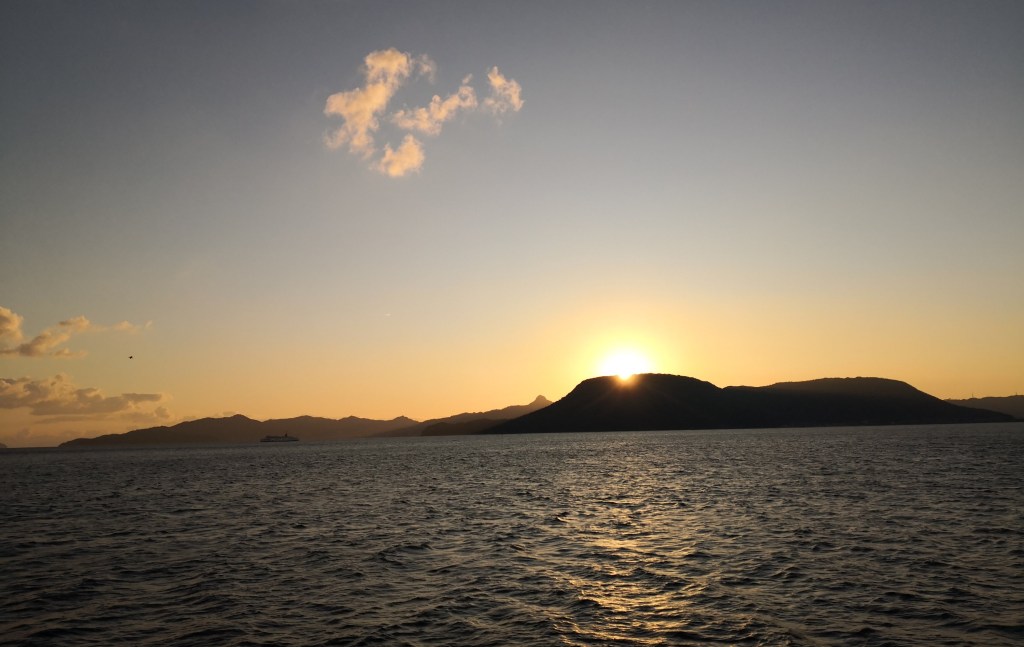
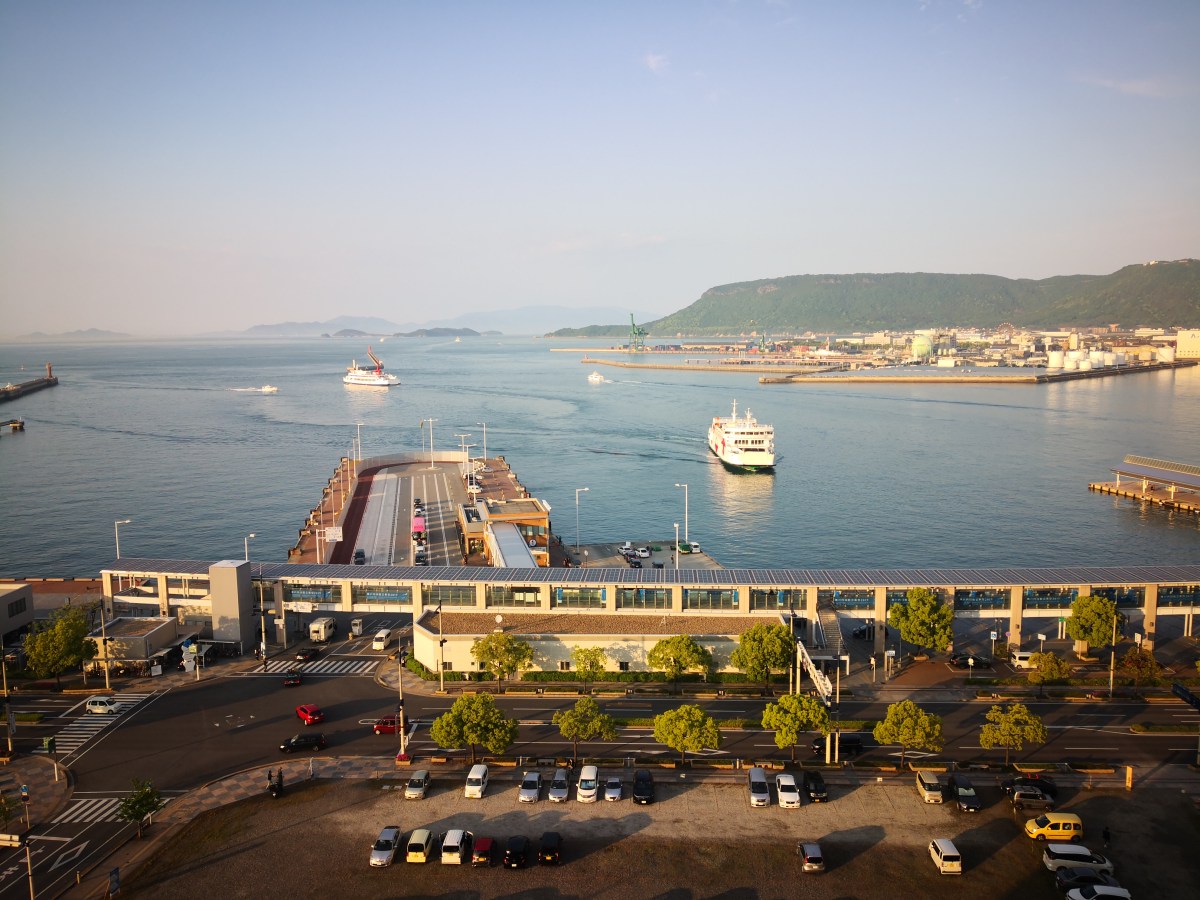
I went all the way to the other side of the planet to explore myself. And, undoubtedly, the experience has been nothing short of extraordinary. My job teaching has been great so far. Many days I come home knowing that I helped students learn English, yet feeling like I somehow didn’t do any work. Where I’m living now is also breathtakingly beautiful. Surrounded by mountains and the inland sea, this port town is famous for udon. Not only have I been able to take in amazing views, but the food has been absolutely delicious. I ride my bike around the city, seeing new things, hearing foreign sounds, and smelling mouthwatering food. It’s like nowhere I’ve been before, yet it has some things that are reminiscent of my hometown. Though they call this the country, to me this is the suburbs – with fields of crops here and giant buildings there. I remember when Brampton was full of open fields. Now it’s all housing. It makes me wonder if and when a similar fate will overtake this place.
I’ve been constantly trying many different things, but I’ve found a few restaurants that I really like, especially a certain western-style one. Amongst the excitement of everything new, I found myself in want of something comfortable. I think I now fully understand why China Towns always pop up everywhere in the West. In a world suddenly so unfamiliar, it’s nice to have a place that feels like home.
Not knowing Japanese in the smaller parts of Japan is difficult, but the experience is very rewarding. When I’m actually able to speak to and connect with people, I feel like I’ve somehow made a breakthrough. But there’s still so much to learn. And that keeps driving me forward. It’s a constant challenge that I’m here to overcome. It’s the challenge of discovering more about myself the hard way. Will I sink or will I swim?
There was a certain point during all of this that I will always remember…
A major turning point in my life happened in my early 20s. I was suddenly having abdominal pains and feeling sick to my stomach. And it kept happening more and more frequently. Doctors were no help. I was pushed through their revolving doors as fast as possible, while they brushed off my complaints. I was told it was just this or just that, which always conflicted with what other doctors had said. I didn’t know what to eat anymore. It always made me sick. Even sleeping was a hassle. Any sort of pressure near my abdomen was either uncomfortable or downright painful. It was a confusing time, to say the least. I stopped going to class at university. And I lost about 20 lbs.
At a culminating point of
frustration, my sister took me to the hospital in hopes of getting to
the bottom of this. By the end of a long wait and a few tests I was
referred to a specialist. It was at this specialist that I was
finally able to begin to make sense of things. More tests led him to
believe that this was 99% Crohn’s disease. From this information, I
was able to develop a plan. I began eating again on a very limited
diet, though the specialist advised me that diet would not help. But
I started to feel better and put on a bit of weight again. I
was able to go
back to class again. My aunt,
who was a nutritionist,
helped me along. Diet
definitely played a key role.
After
a couple
of months,
someone told me I could broaden
my diet. It was true, that I could probably eat a bigger variety than
I was currently eating, though
I was hesitant to try. But
after a bit of coaxing, I was
convinced. I went to their place, where they had a number of things
they wanted me to try. A word of advice to anyone with Crohn’s, or
something similar: never
try introducing multiple things at the same time. If you are going to
try something new, try some of it (not too much) and see how you feel
over the course of the next day or two. I learned this the hard way.
I believe it was chocolate that did me in (which also happens
to be my favourite – and which I still cannot eat). By the end of the
day I felt absolutely terrible. My insides churned and moaned
painfully. When I finally made it home and got it out of my system, I
thought that would be the end of it. I just had to be wary of
chocolate from here on out.
It was nearing the end of the term at school and I still had a couple of final projects to do. I spent the next three days in my room working relentlessly. But over those three days, I gradually became more and more sick. This wasn’t the regular Crohn’s kind of sickness, either. No flare up was ever like this. I had a worsening fever, coupled with headaches. By the end of the third day, there were even more alarming symptoms. Although it was more difficult than it should have been, I finished all of my final projects and was thankful. I turned my focus to my health and scoured the internet for what could possibly be happening to me. I came to the conclusion that what I had ingested punched a hole through my intestine, and was now causing an infection. The solution was surgery. It was worrying, but I made the trip to the emergency room at the hospital.
I knew things would suck
after surgery, but I also knew it was something I had to get through.
I hadn’t come this far just to come this far. I thought there would
probably be some pain, and a small amount of recovery time before
everything was back to normal and I never made this stupid mistake
again. Nothing could have been further from the truth; and it
devastated me. The next month was excruciating. And it seemed
like it would never end.
I wasn’t given anything to
help with the pain. No painkillers; nothing. On top of that, a
visiting nurse poked around my wound every day for the next few weeks
to ensure that there was no infection. Moving around was difficult
and painful. Sitting up was the same. I was essentially bedridden for
that first month, which is Hell in itself.
There was a certain point
during all of this that I think I will always remember. One day,
getting dressed, I found myself feeling particularly cheerful. Since
I had not felt happy in some time, it came as a bit of a shock. My
immediate reaction was to stop this, to get rid of this feeling. I
felt I didn’t deserve it because this was not over yet. But then I
had a thought. Why should I ever stop myself from feeling happy? If I
were to apply that mindset to life, I would be forever miserable.
Life always involves suffering, and if I only allow myself to be
happy when the suffering is over, when am I ever happy? At the end of
my life? Would I even be able to feel it then? It makes no sense. I
could sit around wishing for the day of liberation from this pain, or
I could actively make today better than yesterday. This phrase became
my maxim: You can wish away forever, but you’ll never find a day
like today.
As soon as I could walk, I
was outside. I walked every day until I could run. And then every day
I ran. It was a new freedom, and I owed it to myself. My health
improved. I had a better grasp on my diet. I was finally in control
of the situation, and this is critical for anyone with Crohn’s. If
you are not on top of things, you will easily be overwhelmed. It is
extremely easy to fall into poor health, and a lot of work to stay in
control.
After this whole ordeal, my
specialist hit me with an ultimatum. Either I took whatever drugs he
was selling, or he couldn’t help me. He then got angry with me for
asking for information on the drugs. I did a good amount of research
before coming to the conclusion that these were not necessary for me.
Not only did they increase my chances of cancer by a lot,
but I would have to go to a facility to get them
injected through an IV every
week for a month or two,
and then every two weeks for the rest of my life. I refuse to live
like that. And this isn’t even to mention that approximately half of
the people that were vocal online about their experience with these
drugs got much worse
as a result of taking them. It seemed like such an extreme solution
for something I finally had a grasp on. I’ve never been back to that
specialist since, and though I’ve had my ups and downs, I’ve never
regretted my choice.
Every
day life can make you bitter or better, so they say. Choose the
better gamble. Every single day is a choice. Life is difficult, and
sometimes it can seem like there’s no way out of your situation. But
it’s always worth it to try again. It’s always worth it to start
over. Always. You can wish away forever, but you’ll never find a day
like today.
I had planned to move to Asia for a long time before things finally came together. A few months ago, I accepted a job in Japan, and hoped to escape the Canadian winter. But, unfortunately, I sat around waiting through the cold as the paperwork process took much longer than expected. I went for months without hearing anything back, and for a while I started to wonder if I was destined to stay in Canada after all. But suddenly there I was, walking through the airport. YYZ. Probably my last time here for another year – and I now believe it will also have been the last time I ever take for granted being able to read and understand the world around me. After about 20 hours of traveling, and some help from a very kind Japanese businessman, I finally made it to my accommodations in Osaka.
The next day began my exploration. My first stop: the Pokemon Centre.
In addition to all the plushies you can imagine, nearly any product you can think of has been rebranded by Pokemon. From Popplio glass cups to Pikachu instant ramen. I even got myself an Eeveelution notebook. It was incredible to see the scope of things I could get with Pokemon on them. As a Pokemon fan, this was a fun and worthwhile visit.
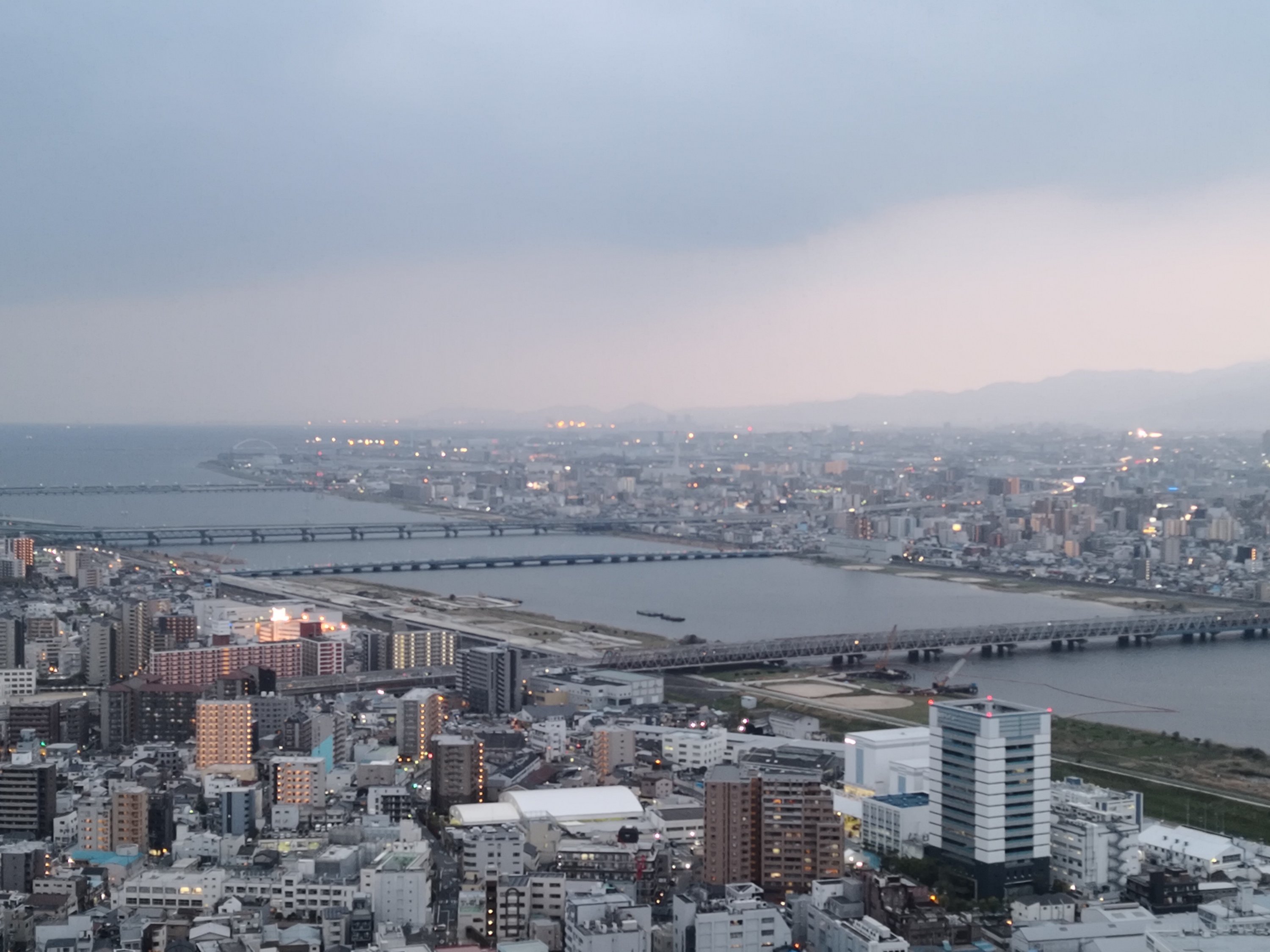
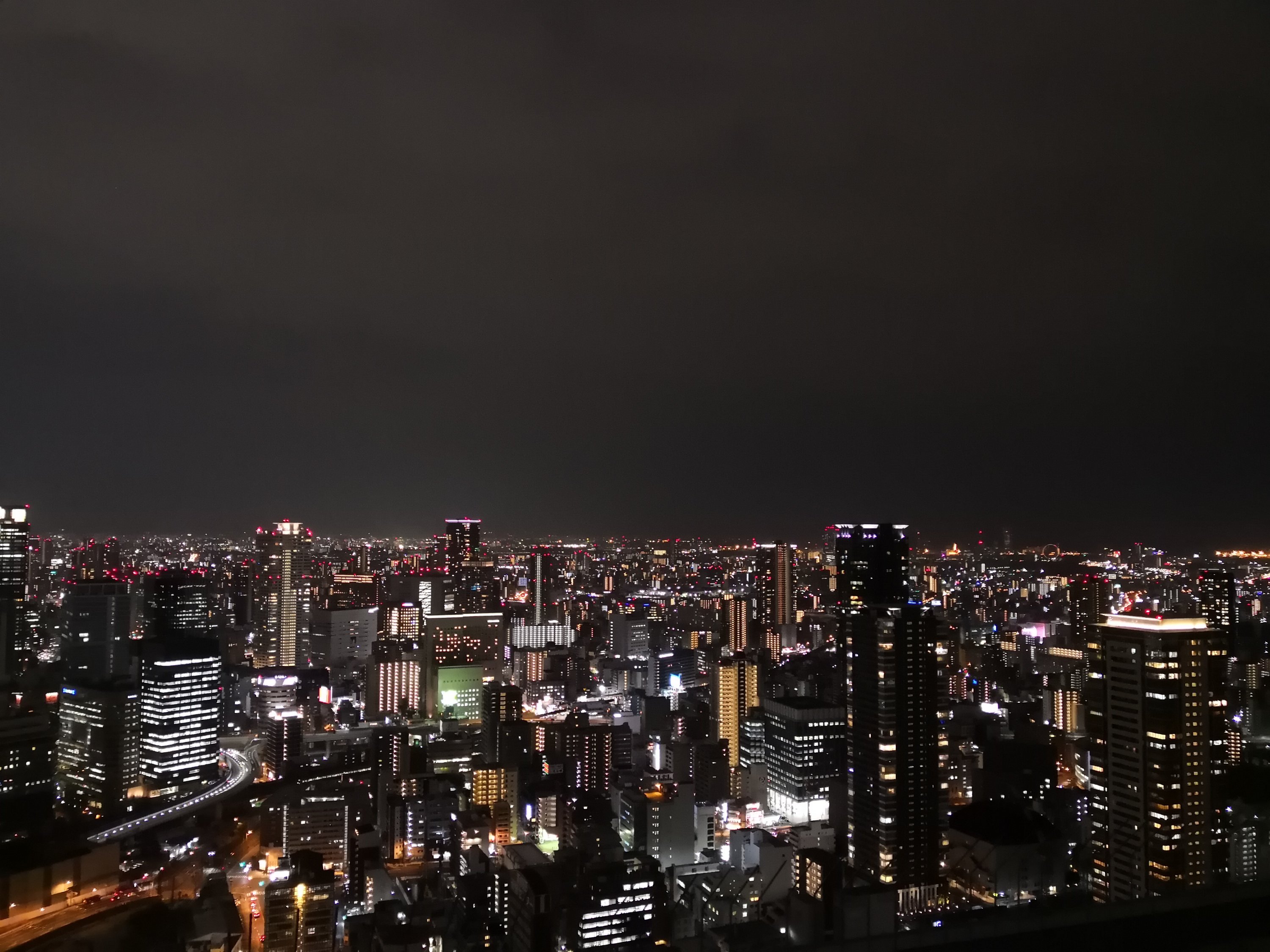
Next, I made my way to the Umeda Sky Building. An elevator shoots you up to an escalator that stretches across to the other side, giving you an awesome perspective as you go up. But it doesn’t stop there. When you get to the top, the view is magnificent. And I managed to get there right around sunset.
There’s a cafe that offers snacks and drinks you can enjoy as you peer out the window and take in the view. I bought myself some tea and did exactly this. By the time night fell, I decided to go back up to the sky walk before I headed back down. To my surprise, a whole different aspect of this marvel of a building had come to life. When the sun disappears, black lights turn on, revealing something new and unique. The path was illuminated by neon specks as I made my way around the sky walk again.
As I looked around, the view stunned me once more. Just as before, in every direction, the city stretched as far as the eye could see. But now, it was filled with lights like shining jewels that pierced the night.
On my way back down, I discovered more and more that this place was also like a museum. There were many displays, as well as a lot of information about the building. There was even an anime playing near the cafe about its construction. I was constantly impressed by every new discovery.
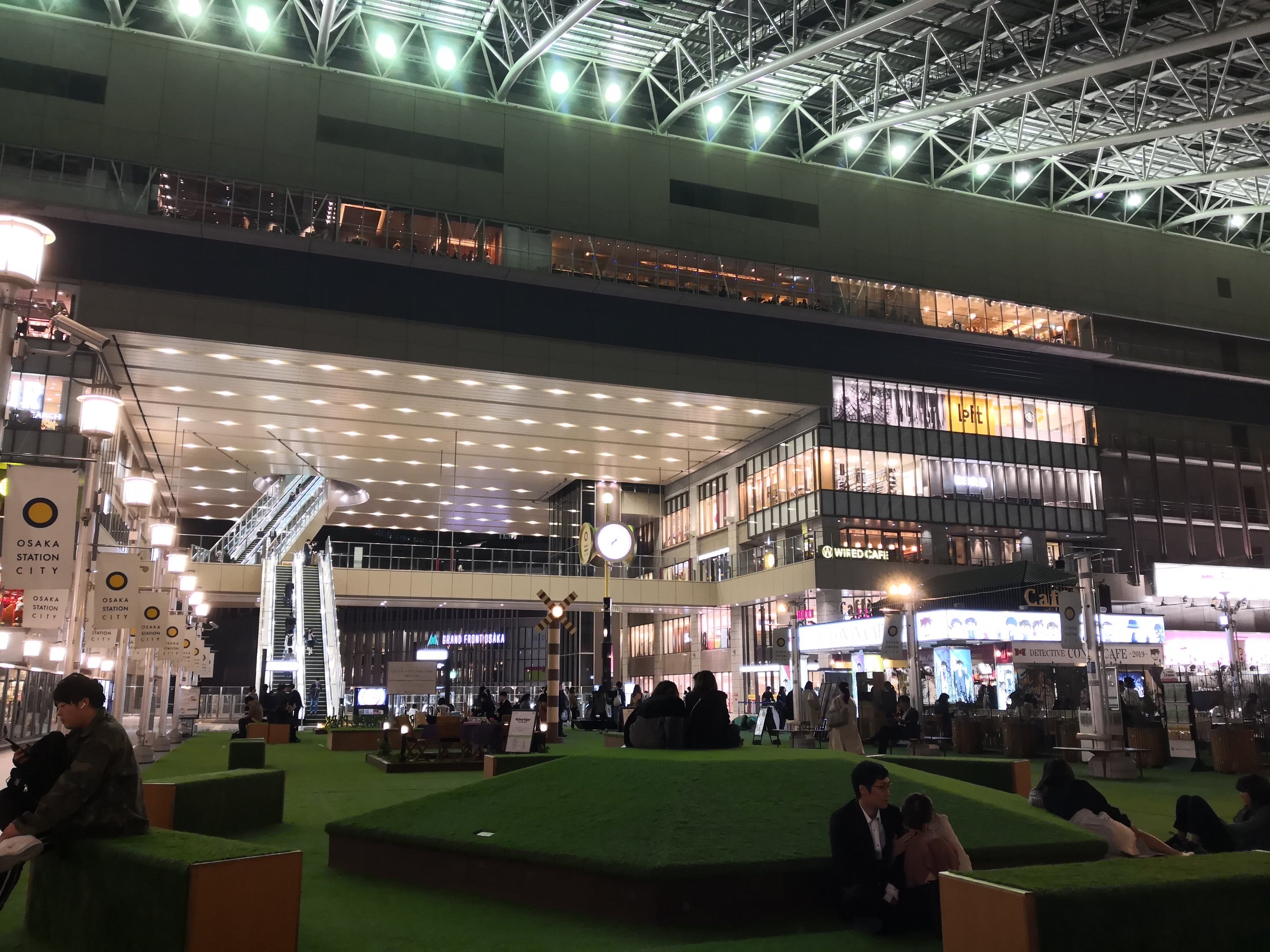
I went back to Osaka station, but instead of going straight to the trains, I decided to look around. I was overwhelmed by how absolutely massive it was. I think it would be accurate to say that it was the biggest place I had ever been in. Even if I spent an entire day exploring it, I would never get to look at everything (and it would be exhausting). I found a lovely “green park” above the tracks where I could relax and stare in wonder. Across from me was a cafe devoted to the anime Detective Conan, which seems to be quite popular here. The cafe was quite popular, too. There was always a line.
I left this green park, only to discover another one a few floors higher up. I really liked the idea of these. They offered a nice, peaceful spot to stop, with the busy, bustling city only a few steps away. And once you stepped out into that station, things were chaotic; and the crowd never ended.
What is perception? How are you making sense of the world around you? Is that reality? Is it all really there? There is an ancient Indian parable that helps to shed light on this matter:
Long ago, six old men lived in a village in India. Each was born blind… They listened carefully to the stories told by travelers to learn what they could about life outside the village.
The men were curious about many of the stories they heard, but they were most curious about elephants. They were told that elephants could trample forests, carry huge burdens, and frighten young and old with their loud trumpet calls. But they also knew that the Rajah’s daughter rode an elephant when she traveled in her father’s kingdom. Would the Rajah let his daughter get near such a dangerous creature?
The old men argued day and night about elephants. “An elephant must be a powerful giant,” claimed the first blind man. He had heard stories about elephants being used to clear forests and build roads.
“No, you must be wrong,” argued the second blind man. “An elephant must be graceful and gentle if a princess is to ride on its back.”
“You’re wrong! I have heard that an elephant can pierce a man’s heart with its terrible horn,” said the third blind man.
“Please,” said the fourth blind man. “You are all mistaken. An elephant is nothing more than a large sort of cow. You know how people exaggerate.”
“I am sure that an elephant is something magical,” said the fifth blind man. “That would explain why the Rajah’s daughter can travel safely throughout the kingdom.”
“I don’t believe elephants exist at all,” declared the sixth blind man. “I think we are the victims of a cruel joke.”
Finally, the villagers grew tired of all the arguments, and they arranged for the curious men to visit the palace of the Rajah to learn the truth about elephants…
When the blind men reached the palace, they were greeted by an old friend from their village who worked as a gardener on the palace grounds. Their friend led them to the courtyard. There stood an elephant. The blind men stepped forward to touch the creature that was the subject of so many arguments.
The first blind man reached out and touched the side of the huge animal. “An elephant is smooth and solid like a wall!” he declared. “It must be very powerful.”
The second blind man put his hand on the elephant’s limber trunk. “An elephant is like a giant snake,” he announced.
The third blind man felt the elephant’s pointed tusk. “I was right,” he decided. “This creature is as sharp and deadly as a spear.”
The fourth blind man touched one of the elephant’s four legs. “What we have here,” he said, “is an extremely large cow.”
The fifth blind man felt the elephant’s giant ear. “I believe an elephant is like a huge fan or maybe a magic carpet that can fly over mountains and treetops,” he said.
The sixth blind man gave a tug on the elephant’s coarse tail. “Why, this is nothing more than a piece of old rope. Dangerous, indeed,” he scoffed.
The gardener led his friends to the shade of a tree. “Sit here and rest for the long journey home,” he said. “I will bring you some water to drink.”
While they waited, the six blind men talked about the elephant.
“An elephant is like a wall,” said the first blind man. “Surely we can finally agree on that.”
“A wall? An elephant is a giant snake!” answered the second blind man.
“It’s a spear, I tell you,” insisted the third blind man.
“I’m certain it’s a giant cow,” said the fourth blind man.
“Magic carpet. There’s no doubt,” said the fifth blind man.
“Don’t you see?” pleaded the sixth blind man. “Someone used a rope to trick us.”
Their argument continued and their shouts grew louder and louder.
Perception, in short, is figuring out what’s there. It is the way in which we make sense of the world around us. It is the interpretation of our senses, and as such, it is fundamental to our understanding of anything. Thus, life is fundamentally defined by our perception of it, and we ultimately control whether our experiences have a positive or negative effect on us.
The story of the blind men and the elephant helps illuminate two things that perception is ultimately dependent on. First, it is clear that our sensory organs are imperative to this process. From the total input that goes into these sensory organs, we select only a small fraction of what is noticeably significant to focus on. We end up ignoring virtually everything else (and if we can’t ignore enough, we suffer from sensory overload). Second, it is not only our senses that influence our perception. The preconceived ideas that the blind men had about the elephant greatly impacted how they deduced what the creature really was. The importance of this can hardly be overstated. Your ideas are the lens through which you view the world; and this lens is essential to the whole process. Contrary to what some may think, perception can never be completely stripped of the influence of ideas. This is because things aren’t understood first objectively (as things or objects), and then personified. We don’t perceive objective reality first, and then infer intent and purpose. We see what things mean just as fast, or faster than we see what they are¹. “Perception of things as tools, for example, occurs before or in concert with perception of things as objects¹.” This means that if you were to find an object that is used as a tool, you would immediately see it as a tool, and not just as an object – because we interpret the world as something to utilize and navigate through, and not as something that merely exists. We see meaning, purpose and value in things intrinsically. The objects we perceive are not simply there, in the world, for our direct perceiving¹. They exist in a complex relationship to one another and to us, not as self-evidently separate, independent objects. “This is true even for our perceptions of ourselves, of our individual persons. We assume that we end at the surface of our skin… [but] even when we do something as apparently simple as picking up a screwdriver, our brain automatically adjusts what it considers body to include the tool¹.”
The brain combines sensory signals with its prior expectations or beliefs about the way the world is, in order to form its best guess of what caused those signals. The brain relies just as much, if not more, on ideas about the world than it does on the information coming in through our sensory organs. We don’t passively perceive the world – we actively generate it. Everything you are experiencing is what the inside of your mind is like. And thus, every being creates the world in its own image.
If
you wanted to feel like you had made your own choice, then you
joined. I knew someday in the near future, I would get a letter
telling me to show up at a certain place at a certain time and I’d
be stuck in the army anyway. Once you turned 18, if you didn’t
volunteer, they sent you that letter; and I had just turned 18 in
June of ‘43. It was more or less conscription through the National
Resources Mobilization Act. Canada didn’t introduce official
conscription until later, when it faced a shortage of troops from a
lack of volunteers after its campaigns in Italy and the Normandy
invasion – even though the Liberal government of 1939 promised it
would not do so.
So
Jack McEwan and I became volunteers in January of 1944. Jack was a
friend from high school, and we enlisted together. I was hoping to
get into the airforce, but because of my eyesight, and because the
Army needed to fill in for the casualties on the front lines, I was
put there instead. There were those of us, like Jack and I, who
volunteered and were willing to fight, and then there were those they
called the conscientious objectors. They ended up in the army as
well, but we were basically two armies: one of conscripts, and one of
volunteers. The conscripts were put into places like guard duty or
the medical corps. They ended up carrying wounded soldiers on the
battlefield instead of carrying rifles. We did basic training
together, but in two different companies. They didn’t mix the guys
who had volunteered and the guys who hadn’t. We were on the same
parade grounds, though.
We
were living in Quonset huts laid out at the ends of a spider-like
pattern, where in the centre you had accommodations such as the
washroom, where you shaved, showered, etc. The huts were filled
mostly with bunk beds and each was connected to these central
facilities. One night, when everything was quiet after lights out, a
bunch of us got together and grabbed the fire hose, put it through
the window of the conscripts’ hut and turned the taps on. Then we
scrambled like crazy to get back to our hut, and into our beds with
the sheets up, pretending to be asleep, but waking up with everyone
else wondering “what’s the matter?!” Meanwhile, the other guys
had gotten pretty damp.
Jack
and I stayed together up until the summer, when he was sent to
Kingston for the rest of his training, and I was shipped to England
for mine. Eventually, he wound up in Italy, and I in Belgium and
Holland. Our forces were coming up, initially from northern Africa,
through Italy and into central Europe. He would have gotten involved
with that. June of 1944 is when they decided to hit the coast of
Europe: Normandy. At that time, I was still training in Canada near
Barrie, Ontario.
By
July, I was training in England. From Camp Borden, just west of
Barrie, I was sent via train to Halifax; and from there, I ended up
on a troop carrier ship. That particular ship was renamed from the
Empress of Japan to the Empress of Scotland as soon as they got it
into the water. It was bigger and faster than convoys, and it came
equipped with sonar. Hopefully we wouldn’t run into trouble. We
embarked on our overseas voyage, but I didn’t know where we were
going. The army didn’t confide in lowly rank and file, and I was only
a Private. We arrived in Glasgow, Scotland, at a harbour that wasn’t
deep enough to handle the ship. Small boats had to pull up beside us
and transport us to shore. Upon finally landing, we were taken to an
army camp in Yorkshire, where we spent more time training. No fire
hose shenanigans this time. Next,
I was sent just south of London, to Cove, where
I spent time learning the art of being a radio operator. In
those days, the radio was very big (it weighed about 35 lbs.) and it
also had a big antenna on it, which made you a marked person with it
waving around. You had to carry it on your back like a backpack, but
of course you couldn’t operate it there, so you had to sling it off
your back and work at it in front of you. Never did have one to
operate after we got out of the camp.
It
was mid-September when training was finished and we were to be
shipped out to France. We were at a harbour, somewhere close to
Brighton, and they had these giant blimp-like balloons tied to the
ships via long cables. These barrage balloons were set up to deter
strafing runs of enemy aircraft, as the cables presented a hazard to
any pilots who
veered too close.
As such, it would force them to stay
at higher
altitudes, and thus
decrease the
surprise
and bombing accuracy. This also meant that friendly fighters and
anti-air artillery could acquire enemy targets easier, should they
attempt an attack. But the result was a harbour filled with different
sized
ships
and goofy-looking balloons hanging over top of them. It looked like a
mess. Among the ships, there were three landing craft that they were
loading troops onto. The other grunts and I were jammed in with all
our gear – a waterproof pack filled with clothing, toiletries,
rations, and whatever personal effects we decided to haul around; a
cartridge belt; a first aid pouch; canteens; a rifle; a small shovel;
and a cargo pack with a tent and blanket inside. My
rifle, like most others, was a bolt-action Lee-Enfield .303 that held
a cartridge of 5
rounds. A
few
of the other men ended up with a
STEN gun, which was a submachine gun that could chop off
your
fingertips if you weren’t careful about how you held it when
firing.
The
troop
carrier
I was on, in particular, was the last one out. The first two made it
out fine, but this
one
must have hit the bottom with the propeller and bent the shaft,
because it
couldn’t keep up with the others. We had to turn around and come
back into the harbour. On our way back in, we were travelling slowly
when they threw out a rope to the dock, and pulled it tight over an
anchor – but
the
rope had a lot of slack down in the bottom of the ship amongst the
troops, and
the
boat refused to stop. Soon enough, the rope tightened up in the air
above the men, and it wasn’t enough to stop the massive ship. It
snapped, whipped down with a lot of force and knocked a bunch of
troops down on the deck. I wasn’t close enough to see exactly what
it had done to them, but it could have easily broken a neck. Luckily
the easiest place to carry a helmet is on your head, so most everyone
was wearing one. Once they finally got the boat properly tied up,
they offloaded everyone on board, put us in vehicles, took us down
the coast to another port, and loaded us onto a ferry – with two or
three decks full of troops. And
instead
of going to France they took us to Belgium.
We
first landed in Ostend, but were shipped across to Ghent. It was a
small city. You learned a lot of things that you didn’t know about
when you got into places like that. Washrooms weren’t the type of
porcelain stuff you were used to. There could just be a cement floor
with a trough down the wall and water running through it, with
footprints on the floor – so you’d put your feet there, and then
did what you had to do down into that trough. My first job was guard
duty at the Leopold Barracks
– a palace-looking
structure.
There were two classes of Belgians: Collaborators, who went along
with the Germans for whatever reason – to get more food, get away
from hassles, or things like that – and non-collaborators. At this
stage of events, the locals were picking up the collaborators, but we
weren’t a part of that. They brought these people in and, with a
razor, cut a swastika on their heads, marking them as German
sympathizers. But that was only one of the lesser things that
happened to them. We were put on guard duty to try and control what
was going on with the prisoners that the locals were bringing into
the jails, and they weren’t treated very nicely. There was a lot of
animosity over the three or four years under the foot of the Germans.
And of course the Germans were hoping to get some cooperation out of
people – and if they didn’t get it, they made it. It wasn’t
unusual to hear machine gun fire going off at night, or
see bodies floating in the canals. They were civilians, but they had
obtained weapons since the troops came
in. Some of them would take weapons off of Germans that were no
longer able to use them. We were there maybe a week at most, and then
we got moved on into Holland. In the military the only information
you really get is from receiving commands. You’re not told very
much – just “go.”
In
mid-September, our troops were trying to cross two bridges over the
Waal River at Nijmegen. Our forces orchestrated a landing of
paratroopers and gliders. They called it Operation Market Garden, and
the plan as a whole intended to secure a series of nine bridges that
could provide an invasion route to Germany. The idea for this
operation was to land these troops and have them hold the bridgeheads
until reinforcements arrived, so that they couldn’t be destroyed.
What our commanders didn’t know at the time was that the Germans
had moved a Panzer division into the area. When the gliders and
paratroopers came in, they were in for a surprise. They fought over
the bridges – back and forth – and they expected to get
reinforcements, but the reinforcements had been delayed at Arnhem.
They needed food and ammunition – and you can’t
do much fighting without ammunition. After five days of fighting, the
offensive couldn’t continue. In the end, a lot of those
paratroopers ended up as prisoners of war.
I
landed in Europe early October, so by the time we got to that area,
we had captured the bridges and the battle had moved on. I actually
walked across a bridge at Nijmegen with the rest of the troops to
fill in behind our forces. It wasn’t all “go-go-go,” either,
because you would only travel so far before you had to stop and
regroup. Where we stopped was just behind where the paratroops had
landed. We stayed stationary there for a number of days. The officers
would send out a group of maybe five or six troops, usually at night,
to reconnoitre and get an idea of what was up ahead. So I went out on
one of these patrols with a handful of other men, and we actually
walked through the area where the gliders had landed – and they
were still there. It
was eerie to see their instruments glow in the dark from the
radium-based paint. A lot of them had a bunch of equipment in them
that never made it out, but you didn’t dare touch any of it. The
battles had gone back and forth, and both sides had occupied the area
at one time or another, so you didn’t know if anything was
booby-trapped. If you really wanted to, you could touch them, but
then you might not live to tell about it. I decided I didn’t want
to.
On
our foray, we came across a farm house. Our commanding officers
wanted to find out if they could get a hold of some German troops for
information regarding what was going on in the area. We weren’t
sure if there was anyone in the house, but it could have been
dangerous to step inside. We threw an incendiary grenade at the door
and it started going up in flames. No one did end up running out, but
it was one less place to worry about anyone hiding in. When we
continued our patrol, we discovered one of the guys didn’t put the
safety on his rifle, which caused a bit of a funk when it went off.
He shot himself in the foot. Since he wasn’t able to walk very well
after that, we had someone carrying his rifle – with the safety now
on – and the other two helping him along to get him back to our
platoon.
When
we got to some of these places, it was uncanny. Everything was
vacant. You kind of wonder where everybody went. They had moved on
and away, out of the noise of the shells. One night, our platoon
slept in a barn that had a bombshell embedded in one of the walls. We
had orders not to touch it. The people may have been gone, but the
animals were still there. Some of them had been hit with pieces of
shrapnel. Though they were still mobile, they were in trouble. A
shell doesn’t discriminate when it lands. It damages everything it
can. Other platoons were scattered around the farm area. We grew
tired of rations, so some of the guys got the bright idea to shoot a
cow. They slung it up in a tree, butchered it and sent it off to the
cooks. It was there that I found canned horse meat. First time I’d
ever come across that.
We
moved on from our static position. When we moved up, we generally
took over from somebody else. Every so often in the warzones, troops
would be circulated. Those on the front would pull back to a rest
area and fresh troops would take their place. There were what they
called foxholes, that were really just holes in the ground, deep
enough that you could get down and out of harm’s way in them. So we
moved in at night to relieve those already at the front in their
foxholes. But moving 200 or 300 men into position is difficult to do
quietly when they’re carrying rifles and all their gear that would
clank around. The enemies would hear this and become curious as to
what’s going on, so they would send out patrols.
Every
once in a while they decided it was too quiet and started dropping
mortar shells. Mortars were basically metal tubes that were aimed on
an angle. They’d drop a bomb down the tube and it would fire it up
into the air. After a couple of those going off, we’d be down in the
foxhole in a hurry because it started splattering shrapnel all over
the place. So we had a couple sessions of that, then moved around,
and I eventually ended up in my foxhole during the night time. When
we took over from the guys that were in it, they pointed at what
looked like a hedge row and said the opposition was through there.
The landscape was pretty well flat – a
farm field on the edge of a forest. We set up our Bren gun, which was
like an oversized rifle with a pair of feet on the bottom with a
curved cartridge of 25 or 50 shells in the top of it. It was a pretty
good and accurate weapon, and we had it pointed towards the hedge. I
also put maybe three or four hand grenades at the top of the trench
on one side; I’m not sure why I put them there, but I figured that
I didn’t want to carry the stupid things and if I needed one I’d
pick it up and pull out the pin. What we weren’t told was that we
were in the last foxhole on that side, in the row of foxholes. We
were at the end of the line, and we didn’t even know it. That’s
how things got dicey.
Some
time after we had everything set up, in the pitch dark of night I
heard something nearby. I wasn’t too sure what, but I picked up a
grenade and pulled the pin. It was about then that three or four guys
with submachine guns stood up on our flank and started saying “hande
hoch!” So we put our hands up – but I’ve got a grenade in one
hand and the pin in the other. And it was dark, so they had no idea
what I was holding. The timer on these grenades was about ten
seconds. The outside had a spring loaded lever, and when you pulled
the pin it allowed you to release the lever and start the timer. As
long as I had it in my hand with the lever down it wouldn’t go
bang, but I didn’t want to let it go now. I could’ve said,
“here,” and handed it to them and hoped I could somehow get away
from the blast; but I managed to get the pin back in, because I knew
realistically if I dropped it we would all be goners.
The
thing is, we were on the border of Germany, and they had been there
maybe four or five years. They had dug trenches about four feet deep
across the field and taken all the dirt away, so they could march
across the field and you wouldn’t see them – even in the
daylight.
That
was November 21st, 1944, and it was when the two of us in that
foxhole became prisoners of war. And I was in the prisoner of war
camp until the 8th of April, 1945.
The
Germans initially took us back to their front line, where their
officers were. They had been there for so long that they had dug out
rooms and covered them with logs, and put dirt and grass on top to
make them well hidden. I ended up being interrogated by one of the
officers, wanting to know who they were up against and what we were
doing. Of course you were only supposed to tell them your name,
serial number and rank. So that’s all I told him. But, they could
see from my uniform that I was Canadian. I ended up in the same cell
as a Royal Air Force pilot, who had been flying a Mosquito before he
was shot down and captured. The Mosquito was a two-engine freighter
bomber, and at that particular time it was one of the fastest
aircraft that either side had. Since we were in the same cell for the
time being – as he was an officer, and they separated the officers
– and he was English, we talked. He said he used to have a
two-seater, him and an observer/navigator that he would get to turn
his seat around and look out the back of the aircraft to let him know
what was coming behind them and how far. I don’t remember exactly
how he was shot down; it may have been from flak. There was an
anti-aircraft gun that fired 20mm shells in a series. It always
amazed me at night to see that type of ground fire going towards
aircraft, because
every so many shells was a tracer
round
that glowed; so you would see every fifth round
shoot into the dark sky – and each seemed like it was catching up
to the last.
I
was in the cell with this pilot for a couple of days before they
moved us. It took a few days to get to the prisoner of war camp. With
a group of German soldiers guarding us, we went through some of the
towns that were bombed, and they were a complete mess. At least half
of the buildings were just piles of brick. At parts like that, we had
to get out and walk. You could tell the people were rather hostile
from the way they acted. They recognized that I wasn’t a German
soldier, and they weren’t very pleased about what had happened to
them. But I didn’t really get to interact with them, because I
always had an armed guard with me.
Prisoner-Of-War
(POW) Camp XIB in Follingbostel was initially a training camp for the
Germans at the outset of the war. It was on top of a salt mine, and
they turned it into a number of POW camps for various different
prisoners. There was a group of Polish women in a camp adjacent to us
that
were forced to work on munitions. And
there
was another camp closeby where the people were treated very badly –
the Germans brought them out every so often, maybe once a week, from
their cells down in the salt mine, and they would line them up, yell
at them, pick up a board and hit one of them with it, knock them
over, and generally abuse them like that. It seemed to me that these
people were some sort of political prisoners, though there wasn’t
much political about it. The Germans captured anyone that was Jewish,
or that seemed Jewish. Even if their name sounded like it might be
Jewish – they didn’t have to be a pure Jew. Our camp was all
soldiers – privates, maybe a few corporals and perhaps a few
sergeants, but the officers were kept in a different camp. The pilot
that I previously shared a cell with would have been sent elsewhere.
A lot of the paratroopers from Operation Market Garden were British,
and the highest ranking officer in our campground was the sergeant
major from that group. He organized (more or less dictated) what we
did; he wanted people to be clean, and once per day you ended up in
line like on a parade to make sure they had 500 bodies. He basically
ran it like an army, and kept everyone together and in order.
The
campground was pretty well full. We
were enclosed by barbed wire, and shoved in crowded
huts filled
with
triple-decker bunk beds. Sometimes there were two to a bed. They had
a sack full of straw for a mattress, with the fleas that went with
them. I hated the fleas. We had no change of clothes, either. Each of
us was stuck wearing the same uniform we were captured in for the
entirety of our time there. The food was very well non-existent. You
might get a piece of black bread, a piece of cheese and some of what
they called coffee – but it was imitation. They didn’t have
anything like coffee beans. I discovered that trying to do anything
with the bread was a pointless endeavour. You couldn’t toast it –
obviously we didn’t have anything like a toaster, but if you had
any kind of flame, it would just catch fire and burn blue. And you
didn’t experiment too often, because you only got the one piece to
try on. You also got a bowl of soup – supposedly soup – made out
of turnips. They tried sugar beets a couple of times, but you
couldn’t even take that because it was too sweet. Didn’t matter
how hungry you were. Sugar beet is not something you want to make
soup out of. In fact, you don’t really want to make soup out of
turnips either. And that was all that was there. Nothing in the way
of meat or anything. Maybe two meals a day, breakfast and supper. I
ended up losing a good 30 pounds in there over the course of 6
months. Went in at around 155 lbs and came out at 125.
Sometimes
we were able to volunteer for work crews. They would gather a group
of about 10 or 20 prisoners to go out with a few armed guards on
various work details. It got you outside the barbed wire of the
campgrounds, so I was always a volunteer. Most of what we did was
repairing railroad track. It took multiple people just to move a
single piece of it. The steel track could be about 30, 40, 50 feet
long and it weighed a lot. You know that old saying that you can drag
a horse to water, but you can’t make him drink? It was the same thing
when we were supposed to be working. They gave you a shovel or a pick
and you would put it in the ground, but maybe take ten minutes to
lift a shovelful. Then, they would get mad at you and yell, so you’d
say, “okay, okay,” and finally pick it up and dump it
somewhere else. I also ended up in the salt mine on two different
occasions. They were excavating down there and putting in rooms with
the intent of having factories underground. After being down there
twice I made a point of being somewhere else when they were looking
for volunteers for that. They put you in a cage, and down you went,
watching the daylight above get smaller and smaller. You might be a
hundred feet down, you might be a thousand feet down. At a certain
point, you couldn’t tell. I’d volunteer for something, but I sure
wasn’t going down there again.
At
one point, the Germans decided they were going to move the camp
because the war was getting closer. They bundled all of us into
boxcars on a train, but we couldn’t go anywhere because there were no
tracks. We spent two days trapped in there with nothing to eat. It
was terrible.
In
an area like that, there were bombings and so on, but they weren’t
generally too close. There was one particular day, though, I was
standing just outside the doorway and there was a British B-17 bomber
flying overhead, and it was being harassed by German fighters. It was
circling as one of the engines started going up in smoke. I counted
seven parachutes that came out of it before the
whole thing exploded.
That’s when I
heard a fshoo
shoo shoo,
and
about
four or five feet away from me, a spent 50 caliber machine gun bullet
came whistling down and buried itself in the ground; and I quickly
decided
to step
back inside because
it wasn’t safe out there.
It
was around Christmas time that the Battle of the Bulge occurred. I
remember the snow; the weather was terrible. On December 16, 1944 the
German army surprised the allies by attacking in the Ardennes
mountains of Belgium, France, and Luxembourg in an attempt to drive a
wedge between the British and the US forces. They tried to make one
last push for victory on their western front, so that they could
focus on the east. Heavy snowstorms hit the battleground as the
fighting ensued. The Americans were ill-equipped for the weather, and
many died from the cold. The Germans pushed back the American lines,
creating a bulge 50 miles wide and 70 miles deep, and giving the
battle its name. But as the weather improved, the allies slowly
regained their ground. Air Force planes became able to attack and
drop supplies. The Germans ran out of fuel, ammunition and manpower.
By the end of January, 1945, the allies achieved victory. But back at
the prisoner camp, more fighting meant more prisoners. Our camp
became even more crowded.
It
was later in my time at the prison camp that I sometimes saw trains
go by – flatbeds, maybe artillery trucks – but the guys on it
were kids. I was maybe 19 at the time, but these were 13 or 14 year
olds that were gathering anything that was alive to try to feed the
army. And the guards at the camp were older men, not physically fit
to get out and slog through the front lines. I didn’t do a lot of
talking to them but I managed to get some information back and forth.
They were ordinary citizens, maybe farmers, probably in their 50s or
later, conscripted into guard duty.
As
the war drew ever-closer, there was talk about them moving the camp
again; and I thought, ‘I
don’t really want to be moving anywhere. In
fact,
if
I’m going anywhere, I’m going back home.’ So
one day, in April – they used to let us into the field adjacent to
our compound from
time to time –
there was a large group of us out in the field with a soccer ball.
There was some brush with a few decent-sized trees not too far away,
so I kicked the soccer ball into the trees, went in after it, kicked
it back, and then kept on going.
I
figured that our troops were north and west, so I headed out that
way. Soon enough, I ran into two other guys that had the same idea.
That was a surprise. I don’t know how or when they got out, but we
were from the same camp. The three of us kept ourselves clear of
travelled roadways and stayed out of sight. We drank water where ever
we could and ate anything we could find, usually from vacated local
farms.
We
found ourselves in a wooded area where everything beneath the trees
was picked clean. I suppose that over the years of the war, people
were scavenging everything they could to keep warm. There was a knoll
at one end of the trees, where we spotted a German soldier. He looked
at us, we looked at him. Everyone paused. Then he went one way, and
we ducked around the other. I presume he had a gun, but he didn’t
know that we didn’t. We were still dressed in the same military
uniform we had been captured in, after all.
Further
on, we decided to watch the road for a bit. A lot of people were
walking down it. Entire families that had packed up everything they
could, some even rolling wheelbarrows, were all fleeing from the
fighting.
We spent that night in a culvert, under a parked tank. We could hear voices from above, but we weren’t close enough to tell whether it was English or German or what. And we weren’t taking any chances. After the tank moved on, we moved on. On the fourth day, we watched the road for a while. Eventually, what looked like an American-style jeep was headed our way. We moved down to the roadside and flagged down a concerned-looking driver that wasn’t too certain who exactly he was stopping for. He turned out to be a good guy, and took us back to the British 11th armoured division.
They
had stopped and set up camp nearby. We first got cleaned up and got
something to eat. It was the first decent meal I’d had in 6 months.
A day or two later, they sent us back to Belgium where we ended up
getting on an airplane back to England. I made it out a month before
the war ended in May. They hadn’t decided what they were going to do
with prisoners of war at that point in time, so we just landed, got
looked over, and got looked after with clean clothes and the like.
Shortly after, we were given leave.
We
didn’t have a choice about going home yet. You don’t make choices in
the army. You got told when you were going. But since we were on
leave, another chap and myself decided to go to Glasgow, Scotland.
There were places that catered to soldiers; recreation areas, or
clubs, that were run by organizations like The Salvation Army or the
Red Cross. We needed a place to stay, and they provided. Of course
you took your rations with you, because they were still rationed at
that time. We spent a few days there, and met another soldier who was
getting married. He was from Nova Scotia, and since he had no family
that could make it, he wanted Canadians at the wedding. Three of us
wound up at the wedding, and we got put up for the night. But there
was only one bed – so we laid across it instead of sleeping on it
normally. Still better than the camp.
We were on the train from Glasgow to London when word came out that the war was over. The Germans had quit. Stepping off the train was a sight to behold. London was a madhouse; everyone was out in the streets. But when we got back to camp, they had still not decided how to treat those that were prisoners of war. After beginning to eat something that you hadn’t for 6 months (full meals) you got instant indigestion for a month. In fact, you weren’t used to eating, period. Later on, I imagine they looked after diets and things like that for people coming out of the prisoner of war camps. They did create specially organized units with the purpose of recovering and repatriating surviving prisoners when the war finally came to an end, but since I was out before all of that, I had no experience with them.
I
was eventually shipped home on the
SS
Volendam, escorted by a Fairmile. I was back in Toronto by June,
1945, and very happily so. I was able to return to life as a regular
citizen. It
wasn’t for another short while until I saw Jack again. He was still
on duty after the war ended – but
we
both made it through. Some
time later,
I received my medals:
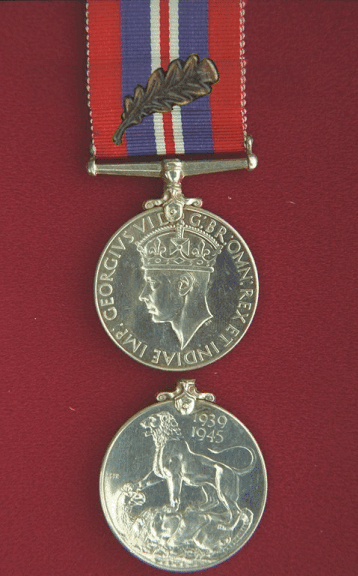
War Medal 1939-1945: awarded to full-time personnel of the Armed Forces for serving for 28 days between 03 September 1939 and 02 September 1945.
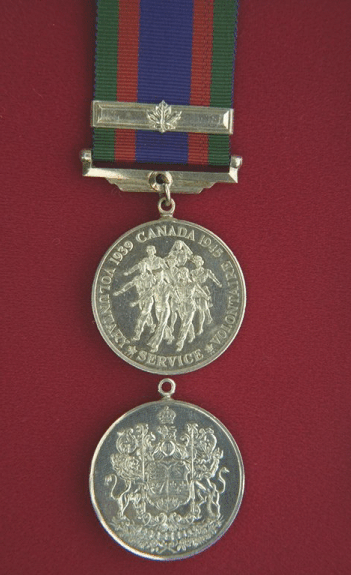
Canadian Volunteer Service Medal: granted to persons of any rank in the Naval, Military or Air Forces of Canada who voluntarily served on Active Service and honourably completed eighteen months total voluntary service from 03 September 1939 to 01 March 1947. A silver bar (or clasp) was awarded for 60 days service outside Canada.
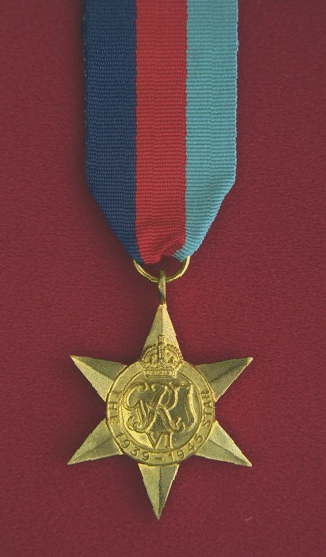
1939-1945 Star: awarded for six months service on active operations for Army and Navy.
France and Germany Star: awarded for one day or more service in France, Belgium, Holland, or Germany between 06 June 1944 (D-Day) and 08 May 1945.
War
isn’t something you should ever get involved in. When the army
commands you to do something, it doesn’t matter if you like it or
not. You can’t just say no; and it’s a dangerous job. I spent a
long time trying to forget it.
Life happens. Everyone seems to only get busier with it. Time flies by faster and faster. Suddenly you look back and another couple of years just went by. What even happened?
I haven’t been writing as much as I’d like to. I’ve been telling myself that I’ll eventually find the time, but I only discover more and more that I have to make the time. And to be honest, there are a lot of things in my life I have taken this viewpoint on. Procrastination sure is a big problem, isn’t it? Being a perfectionist doesn’t help. I feel the need to wait until I have gathered all information I possibly can and taken everything into consideration. On the surface this seems rational, but if we actually look at it rationally, you just can’t possibly have all of the information, let alone have taken everything into consideration. What usually happens is that you wait, and wait, until you have no other choice but to act (and you generally just make a split-second decision, anyway). Deadlines used to help me do this, but with my own blog I can make my own deadlines (which, in the past, has meant I don’t have any deadlines – oops). So where does that leave us? It seems to me a good solution to act when you have a good grasp of the situation. Identifying that point may be its own problem, but taking this all into consideration should help. There comes a time in life when you have to just act. I’ve come to realize my life is something I have to actively mold into what I want. Every day is a choice. And the only place to begin is now; because here is where we are. So I’d like to start up my blog again. I’d like to share more of what I’ve worked on over the years. Maybe I’ll even end up sharing some poetry.
This year will be the beginning of a whole new adventure – a brand new chapter in my life. I’m moving to Asia. Will I be able to keep up with my blog? I hope so. I suspect part of it will get a lot more personal as I experience new places, people, and cultures; and wish to share those experiences. I still intend to finish the posts I was preparing previously, but the initial purpose of this whole project was for me to write about whatever I wanted to write about; and I will stay true to that.
On that note, I have also been researching a few other topics that interest me and I will be rearranging the list of things I want to cover on this blog. Why are mental health issues rising at an alarming rate in our society? Why do we seem so divided? What, if anything, can we do to fix this mess we find ourselves in? These are a few of the questions I’ve been asking, and I’ve come across some very compelling answers.
New technologies have given us access to a plethora of information – so much, in fact, that it would be impossible for a single person to ever take it all in within their lifetime. I don’t claim to have all of the answers. Anyone who does should not be trusted. But I would like to do my part by focusing on and making sense of what interests me.
A lot has happened over the past few months. I’ve been extremely busy. For anyone who knows anything about me, I have a lot of hobbies. At the moment (and maybe in general) this means that I have a lot of projects going on at once. I had planned to be writing at least every weekend, but a major kink in that plan is how busy I am with work. Almost every week has been a six day work week. At a place where I’m surrounded by chairs with nowhere to sit. It’s very hectic there, and my entire work environment has been in a state of flux. Aside from this, I’ve been working here and there on my next blog post about perception. And the more I do on that, the more I have for the next one about consciousness. In addition to all that, I’ve been working on writing my grandfather’s World War II story. If all goes well, this will all be posted on my blog as soon as possible. I do realize I said I was going to try to post more often, but for the kind of content I want to create, and with how busy I currently am, approximately once a month seems most realistic.
With my article about perception coming up next, I’ll leave a few prior thoughts here:
As I said before, perception is a multifaceted tool for understanding. This will make more and more sense the deeper I get into it. What I mean by perception here is an awareness of one’s environment derived through senses and thoughts. For this, a kind of judgment is required to be made by the individual. The individual and its identity thus play a crucial role. But then, what is identity? In other words, we may ask, “who am I?” What makes me myself, as apart from the rest of the world, and the other people, who to themselves are also “I”? You may notice that the more you pursue this, the more you begin to think of things that aren’t you, in order to describe you. You may think you’re so and so feet tall, you look a certain way, you behave in such a way given a certain context, another way given another. All of these things depend on things outside you, in your environment. Then, if we go the other way and try to describe your environment, eventually it all comes back to you. This is because all existence is a relationship. There cannot be an organism without an environment, and there cannot be an environment without an organism to perceive it. It’s inconceivable. You are not an ego locked in a bag of skin, piloted by something in your head – those are all merely parts of you. You are part of your environment. And it is part of you.
With the right understanding of perception, it is plain to see that anything is possible.





 Down Here on Earth